Quick Verdict: Top Picks
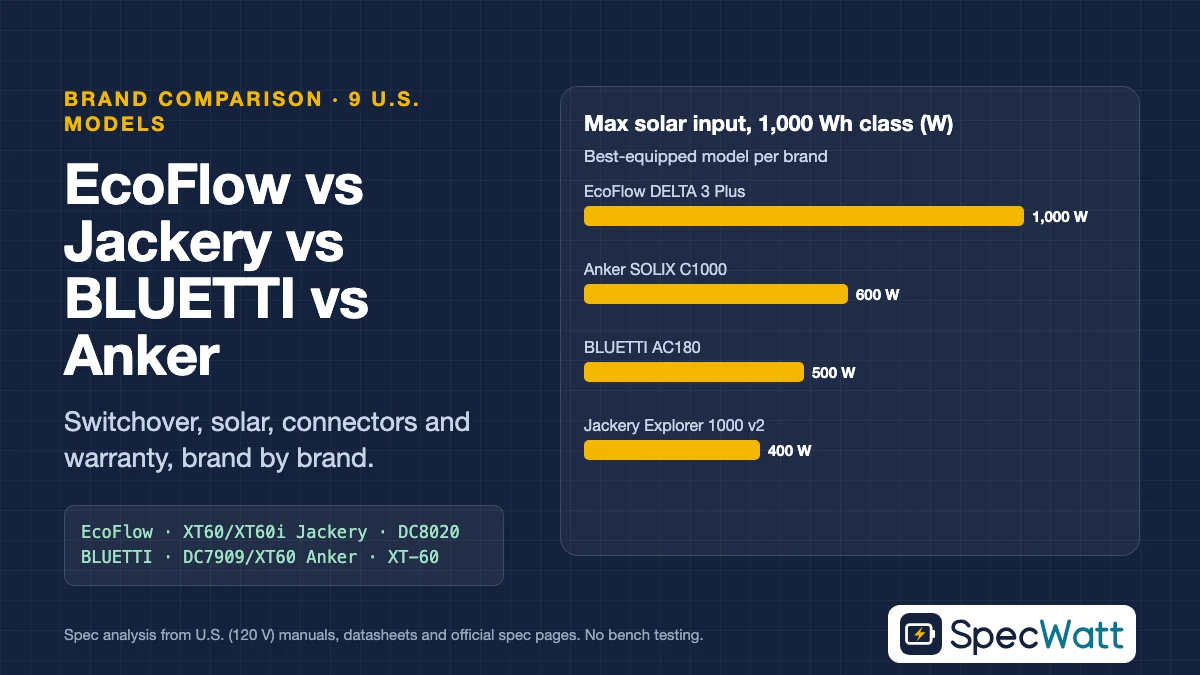
- Best OverallEcoFlow DELTA 3 PlusThe fastest published switchover (10 ms) and the most solar input (1,000 W) of the nine models.Check Price for EcoFlow DELTA 3 Plus (opens Amazon in a new tab)
- Best ValueBLUETTI AC70The lowest price per rated Wh on the makers' U.S. stores on Nov 18, 2026: $0.47.Check Price for BLUETTI AC70 (opens Amazon in a new tab)
- Most PortableJackery Explorer 1000 v2The lightest model above 1,000 Wh (23.8 lb) and the most energy per pound of the nine: about 45 Wh/lb.Check Price for Jackery Explorer 1000 v2 (opens Amazon in a new tab)
- Best for Long OutagesEcoFlow DELTA 2 MaxThe most capacity of the nine models in this guide sold new on Nov 18, 2026: 2,048 Wh.Check Price for EcoFlow DELTA 2 Max (opens Amazon in a new tab)
Picks are based on the manufacturer specs and the math in this guide. Prices change often, so check the current price on Amazon.
In the EcoFlow vs Jackery vs BLUETTI vs Anker SOLIX question, each brand wins a different category. In the 1,000 Wh class, EcoFlow leads on outage switchover and solar input, with a 10 ms UPS and 1,000 W of solar on the DELTA 3 Plus. BLUETTI had the lowest price per watt-hour on the makers’ U.S. stores on November 18, 2026. Jackery’s Explorer 1000 v2 is the lightest model above 1,000 Wh, and Anker’s SOLIX C1000 offers flexible solar input with a 5-year warranty, though Anker has reshuffled its U.S. lineup.
Brand loyalty matters less than it seems, because each brand’s models vary a lot. So we compared the four brands on what they publish for nine U.S. (120 V) models: switchover time, solar connector and limits, warranty, weight and price per rated watt-hour. Every number comes from the maker’s own U.S. documentation.
Quick Comparison: EcoFlow vs Jackery vs BLUETTI vs Anker SOLIX at a Glance
| Brand | Models compared here | Battery chemistry | Solar connector | Published switchover | Warranty |
|---|---|---|---|---|---|
| EcoFlow | DELTA 3 Plus, DELTA 2 Max, RIVER 2 Pro | LFP | XT60 / XT60i | 10 ms (DELTA 3 Plus); EPS under 30 ms (DELTA 2 Max); not listed (RIVER 2 Pro) | 5 years (DELTA 3 Plus U.S. spec page) |
| Jackery | Explorer 1000 v2, Explorer 2000 Plus | LiFePO4 (1000 v2); lithium-ion per the 2000 Plus manual | DC8020 | 20 ms (both) | 3 years, extendable by 2 to 5 (1000 v2 U.S. spec page) |
| BLUETTI | AC180, AC70 | LiFePO4 | DC7909 (AC180); XT60 (AC70) | 20 ms or less | 60 months in BLUETTI’s UK/EU warranty table (U.S. term not confirmed) |
| Anker SOLIX | C1000, C800X | LiFePO4 | XT-60 | Under 20 ms | 5 years (C1000, A1761 datasheet); C800X not confirmed |
Switchover is the published time to move a plugged-in load from the wall to the battery; warranty is the maker’s published term for the models named. Sources: each model’s U.S. user manual, U.S. datasheet or official U.S. spec page, listed in the sections below. Warranty terms can differ by retailer and region; confirm them before you buy. Checked November 18, 2026.
This table summarizes each brand across the models in this guide, and the connector column has a practical consequence. EcoFlow, Anker SOLIX and BLUETTI’s AC70 use XT60-family plugs, so many panels with an MC4-to-XT60 cable work across those brands. Jackery’s DC8020 and BLUETTI’s DC7909 on the AC180 need their own adapters, which our solar panel connector types guide explains.
The switchover column matters for home backup, and it’s the clearest gap in EcoFlow vs Jackery at 1,000 Wh: 10 ms on the DELTA 3 Plus against 20 ms on the Explorer 1000 v2. All four brands publish 20 ms or faster on at least one model, but the RIVER 2 Pro documents we used don’t list a switchover time at all.
Model by Model: Nine U.S. Models Compared
The next table lists the nine models behind the brand summary. The first three columns (capacity, AC output at 120 V and solar input) settle most EcoFlow vs Jackery questions before price does.
Models at a glance
EcoFlow
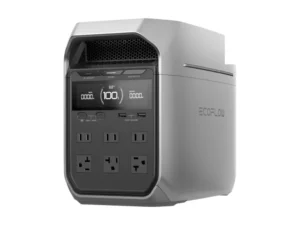
DELTA 3 Plus
- Capacity1,024 Wh LFP
- AC output (120 V)1,800 W (3,600 W surge)
- Solar input2 × 500 W, 11–60 V (1,000 W)
Best for: The fastest published switchover (10 ms) and the most solar input (1,000 W) of the nine models.
Check Price on Amazon for EcoFlow DELTA 3 Plus (opens Amazon in a new tab)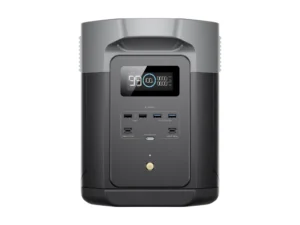
EcoFlow
DELTA 2 Max
- Capacity2,048 Wh LFP
- AC output (120 V)2,400 W (4,800 W surge)
- Solar input2 × 500 W, 11–60 V, 15 A (1,000 W)
Best for: The most capacity of the nine models in this guide sold new on Nov 18, 2026: 2,048 Wh.
Check Price on Amazon for EcoFlow DELTA 2 Max (opens Amazon in a new tab)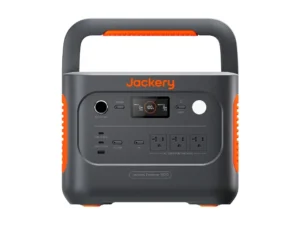
Jackery
Explorer 1000 v2
- Capacity1,070 Wh LiFePO4
- AC output (120 V)1,500 W (3,000 W peak)
- Solar input2 × 200 W (400 W), 16–60 V
Best for: The lightest model above 1,000 Wh (23.8 lb) and the most energy per pound of the nine: about 45 Wh/lb.
Check Price on Amazon for Jackery Explorer 1000 v2 (opens Amazon in a new tab)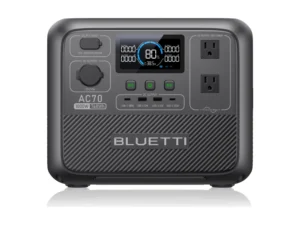
BLUETTI
AC70
- Capacity768 Wh LiFePO4
- AC output (120 V)1,000 W (2,000 W Power Lifting)
- Solar input500 W, 12–58 V, 10 A
Best for: The lowest price per rated Wh on the makers' U.S. stores on Nov 18, 2026: $0.47.
Check Price on Amazon for BLUETTI AC70 (opens Amazon in a new tab)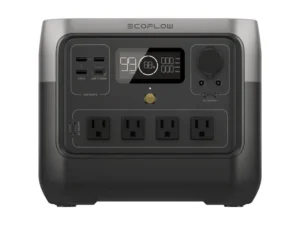
EcoFlow
RIVER 2 Pro
- Capacity768 Wh LFP
- AC output (120 V)800 W (1,600 W surge)
- Solar input220 W, 11–50 V, 13 A
Best for: The lightest of the nine at 17.2 lb.
Check Price on Amazon for EcoFlow RIVER 2 Pro (opens Amazon in a new tab)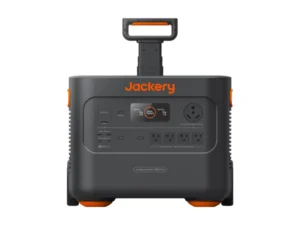
Jackery
Explorer 2000 Plus
- Capacity2,042.8 Wh lithium-ion
- AC output (120 V)3,000 W (6,000 W surge)
- Solar input2 × DC8020, 11–60 V, 1,400 W combined
Best for: The highest AC output here (3,000 W); refurbished only on Jackery's U.S. store on Nov 18, 2026.
Check Price on Amazon for Jackery Explorer 2000 Plus (opens Amazon in a new tab)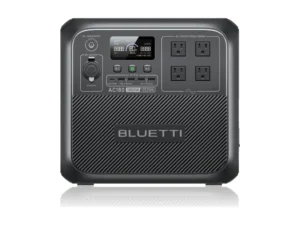
BLUETTI
AC180
- Capacity1,152 Wh LiFePO4
- AC output (120 V)1,800 W (2,700 W Power Lifting)
- Solar input500 W, 12–60 V, 10 A
Best for: The largest 1,000 Wh-class battery here (1,152 Wh) at about $0.48 per rated Wh on Nov 18, 2026.
Check Price on Amazon for BLUETTI AC180 (opens Amazon in a new tab)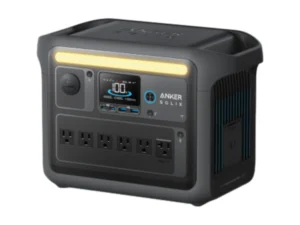
Anker SOLIX
C1000
- Capacity1,056 Wh LiFePO4
- AC output (120 V)1,800 W (2,400 W surge)
- Solar input600 W, 11–60 V
Best for: 600 W of solar with a series-friendly 32–60 V window; check the part number on any listing.
Check Price on Amazon for Anker SOLIX C1000 (opens Amazon in a new tab)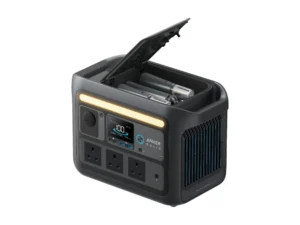
Anker SOLIX
C800X
- Capacity768 Wh LiFePO4
- AC output (120 V)1,200 W (1,920 W surge)
- Solar input300 W, 11–60 V, 10 A
Best for: 1,200 W of AC on 768 Wh; no longer listed on Anker's U.S. store on Nov 18, 2026.
Check Price on Amazon for Anker SOLIX C800X (opens Amazon in a new tab)Specs from each model's U.S. manual or official datasheet. Full comparison in the table below. As an Amazon Associate we earn from qualifying purchases.
| Model | Capacity | AC output (120 V) | Solar input | Weight | Price |
|---|---|---|---|---|---|
| EcoFlow DELTA 3 Plus | 1,024 Wh LFP | 1,800 W (3,600 W surge) | 2 × 500 W, 11–60 V (1,000 W) | 27.6 lb | Check Price for EcoFlow DELTA 3 Plus (opens Amazon in a new tab) |
| EcoFlow DELTA 2 Max | 2,048 Wh LFP | 2,400 W (4,800 W surge) | 2 × 500 W, 11–60 V, 15 A (1,000 W) | 50 lb | Check Price for EcoFlow DELTA 2 Max (opens Amazon in a new tab) |
| EcoFlow RIVER 2 Pro | 768 Wh LFP | 800 W (1,600 W surge) | 220 W, 11–50 V, 13 A | 17.2 lb | Check Price for EcoFlow RIVER 2 Pro (opens Amazon in a new tab) |
| Jackery Explorer 1000 v2 | 1,070 Wh LiFePO4 | 1,500 W (3,000 W peak) | 2 × 200 W (400 W), 16–60 V | 23.8 lb | Check Price for Jackery Explorer 1000 v2 (opens Amazon in a new tab) |
| Jackery Explorer 2000 Plus | 2,042.8 Wh lithium-ion | 3,000 W (6,000 W surge) | 2 × DC8020, 11–60 V, 1,400 W combined | 61.5 lb | Check Price for Jackery Explorer 2000 Plus (opens Amazon in a new tab) |
| BLUETTI AC180 | 1,152 Wh LiFePO4 | 1,800 W (2,700 W Power Lifting) | 500 W, 12–60 V, 10 A | 35.3 lb | Check Price for BLUETTI AC180 (opens Amazon in a new tab) |
| BLUETTI AC70 | 768 Wh LiFePO4 | 1,000 W (2,000 W Power Lifting) | 500 W, 12–58 V, 10 A | 22.5 lb | Check Price for BLUETTI AC70 (opens Amazon in a new tab) |
| Anker SOLIX C1000 | 1,056 Wh LiFePO4 | 1,800 W (2,400 W surge) | 600 W, 11–60 V | 28.4 lb | Check Price for Anker SOLIX C1000 (opens Amazon in a new tab) |
| Anker SOLIX C800X | 768 Wh LiFePO4 | 1,200 W (1,920 W surge) | 300 W, 11–60 V, 10 A | 23.15 lb | Check Price for Anker SOLIX C800X (opens Amazon in a new tab) |
Sources: EcoFlow U.S. DELTA 3 Plus spec page and the DELTA 2 Max and RIVER 2 Pro user manuals; Jackery U.S. JE-1000D specification page and Explorer 2000 Plus manual (JE-2000C); BLUETTI AC180 and AC70 user manuals; Anker A1761 and A1755 datasheets (Sales Market: US/CA). BLUETTI’s Power Lifting modes apply to resistive loads only.
Two patterns stand out. In the 1,000 Wh class, EcoFlow’s DELTA 3 Plus accepts the most solar (1,000 W), while at 2,000 Wh the Jackery Explorer 2000 Plus leads with 1,400 W against the DELTA 2 Max’s 1,000 W. Jackery’s Explorer 1000 v2 is the lightest model above 1,000 Wh at 23.8 lb, while BLUETTI’s AC180 trades weight (35.3 lb) for the most capacity in that class.
EcoFlow vs Jackery vs BLUETTI on Price per Watt-Hour
Price changes daily, so we divided each standalone unit’s price on its maker’s U.S. store on November 18, 2026 by its rated capacity; other retailers and days will differ. In the EcoFlow vs BLUETTI price race, BLUETTI led, but the top five sit within five cents per watt-hour.
From lowest to highest price per rated watt-hour: the BLUETTI AC70 was $359 ($0.47 per Wh), the BLUETTI AC180 $549 ($0.48), the EcoFlow RIVER 2 Pro $369 ($0.48), the EcoFlow DELTA 2 Max $1,029 ($0.50), the Jackery Explorer 1000 v2 $559 ($0.52) and the EcoFlow DELTA 3 Plus $719 ($0.70). Anker’s U.S. store no longer listed the C800X and sold the C1000 only as the C1000X, and the Jackery Explorer 2000 Plus was listed only as a refurbished unit, so we left them out of this ranking. The DELTA 3 Plus is the outlier, and you pay that premium for its 10 ms switchover and 1,000 W solar input.
How We Picked the Four Awards
Each award follows one published spec or one dated price, so you can check it against the tables above. Two of the four picks come out of the EcoFlow vs Jackery matchup. Best Overall goes to the EcoFlow DELTA 3 Plus, the only 1,000 Wh-class model here with both a published 10 ms UPS switchover and 1,000 W of solar input. Best Value goes to the BLUETTI AC70, which had the lowest price per rated watt-hour on the makers’ U.S. stores on November 18, 2026 ($359, or $0.47 per Wh).
Most Portable goes to the Jackery Explorer 1000 v2, the lightest model above 1,000 Wh (23.8 lb) and the one with the most rated energy per pound (about 45 Wh). The RIVER 2 Pro and AC70 weigh less but hold 768 Wh. Best for Long Outages goes to the EcoFlow DELTA 2 Max, which had the most rated capacity (2,048 Wh) of the nine models here sold new that day.
EcoFlow: Fastest Switchover and the Most Solar at 1,000 Wh
When EcoFlow vs Jackery comes down to the spec sheet, EcoFlow’s edge is its electronics. The DELTA 3 Plus lists a 10 ms UPS switchover, 1,500 W of AC charging and two 500 W solar inputs on a 1,024 Wh battery; the DELTA 2 Max pairs 2,048 Wh with 2,400 W of AC output and 1,000 W of solar. Both use XT60-family solar plugs, and EcoFlow lists a 5-year warranty on the DELTA 3 Plus.
The weak spots are the small model and the price. The RIVER 2 Pro’s solar input stops at 220 W, and its documents don’t list a switchover time. In an EcoFlow vs Jackery matchup at the 1,000 Wh level, the DELTA 3 Plus costs about $160 more than the Explorer 1000 v2 on that date and weighs 3.8 lb more.
Who should skip it: buyers chasing the lowest price per watt-hour (the DELTA 3 Plus was $0.70 per Wh on November 18, 2026) and anyone who carries the DELTA 2 Max often, since it weighs 50 lb and lists an EPS switchover under 30 ms rather than 10 ms.
Jackery: Most Energy per Pound
Jackery’s Explorer 1000 v2 packs 1,070 Wh into 23.8 lb, about 45 Wh per pound, narrowly ahead of the RIVER 2 Pro (44.7 Wh per pound) and the best ratio among the nine models here. Jackery’s U.S. specification page lists 1,500 W of AC output, a 20 ms switchover and 400 W of solar through two DC8020 inputs, with a 3-year warranty that can be extended by 2 years to a total of 5.
Where Jackery gives ground in EcoFlow vs Jackery is solar input, and its 2,000 Wh lineup is in flux. At 400 W, the Explorer 1000 v2 accepts less than half the solar of EcoFlow’s DELTA 3 Plus. On November 18, 2026, Jackery’s U.S. store listed the Explorer 2000 Plus only as refurbished and pointed buyers to the newer HomePower 2000 Plus v2, which we haven’t verified here.
Who should skip it: solar-heavy users who want more than 400 W of panel input on the Explorer 1000 v2, and outage planners who need a switchover faster than 20 ms.
BLUETTI: Lowest Price per Watt-Hour
BLUETTI had the two lowest prices per rated watt-hour on November 18, 2026: the AC70 at $0.47 and the AC180 at $0.48. The AC180 also has the largest battery of the 1,000 Wh models here (1,152 Wh), 1,800 W of continuous AC output and a switchover of 20 ms or less, according to its manual. BLUETTI’s UK/EU warranty table lists 60 months for both models; the U.S. manuals page we found doesn’t state the term clearly, so confirm it with the seller.
The brand mixes connectors: the AC180 uses DC7909 for solar, while the AC70 uses XT60. Both inputs stop at 500 W, and the AC180 is the heaviest 1,000 Wh model in this guide at 35.3 lb. Its manual also lists about 15 W of self-consumption with the inverter on.
Who should skip it: anyone who needs more than 1,000 W of continuous AC from the AC70 (its 2,000 W Power Lifting works only with resistive loads) or wants a 1,000 Wh unit under 35 lb.
Anker SOLIX: Flexible Solar and a 5-Year Warranty
Anker’s C1000 accepts 600 W of solar on one XT-60 input, with a current limit that rises from 10 A at 11–32 V to 12.5 A at 32–60 V, so a two-panel series string uses it well. Its U.S./Canada datasheet also lists 1,800 W of AC output (2,400 W surge), a UPS switchover under 20 ms and a 5-year warranty.
Availability is the issue. On November 18, 2026, Anker’s U.S. store no longer listed the C800X, and it sold the C1000 as the C1000X (part number A1761111, the same A1761 model) next to the C1000 Gen 2, whose specs we haven’t verified. In an Anker SOLIX vs EcoFlow decision, check the exact part number on any listing before comparing specs.
Who should skip it: buyers who can’t confirm the exact part number on the listing, since the C1000, C1000X and C1000 Gen 2 are sold side by side.
Which Brand Should You Choose?
Pick by the job first, then check the specific model; that holds for a two-way EcoFlow vs Jackery choice and for all four brands. The brand summary above narrows the field, but the model table decides it.
- Home backup for a computer or CPAP: EcoFlow, for the DELTA 3 Plus’s 10 ms switchover; see our home backup guide.
- Most capacity for the money: BLUETTI, with the lowest price per watt-hour on November 18, 2026.
- Carrying it to camp: Jackery, for the Explorer 1000 v2’s 45 Wh per pound; see our camping and RV guide.
- Solar with existing XT60 panels: EcoFlow or Anker SOLIX; check panel voltage with the Voc & MPPT compatibility checker.
For an EcoFlow vs Jackery vs BLUETTI vs Anker head-to-head at 1,000 Wh, read our 1000Wh comparison. For budget options, see the under-$500 guide.
Frequently Asked Questions
It depends on the job. In an EcoFlow vs Jackery comparison at 1,000 Wh, the DELTA 3 Plus has a faster switchover (10 ms vs. 20 ms) and more solar input (1,000 W vs. 400 W), while the Explorer 1000 v2 is lighter (23.8 lb vs. 27.6 lb) and cost less on November 18, 2026.
On specs, the BLUETTI AC180 matches the DELTA 3 Plus on continuous AC output (1,800 W) and has more capacity (1,152 Wh vs. 1,024 Wh). EcoFlow leads on switchover and solar input. BLUETTI had the lower price per watt-hour on November 18, 2026.
No single brand wins. EcoFlow lists 5 years on the DELTA 3 Plus and Anker lists 5 years on the C1000. BLUETTI’s UK/EU warranty table lists 60 months for the AC180 and AC70, but the U.S. term isn’t confirmed. Jackery lists 3 years on the Explorer 1000 v2, extendable by 2 years to 5.
Often, yes, if the panel’s voltage and current fit the station’s input limits and you have the right cable. EcoFlow, Anker and BLUETTI’s AC70 use XT60-family plugs; Jackery uses DC8020. Check the numbers with a compatibility calculator first.
For switchover speed, EcoFlow, because the DELTA 3 Plus lists 10 ms. For runtime, the 2,048 Wh EcoFlow DELTA 2 Max had the most capacity of the nine models here sold new on November 18, 2026; the BLUETTI AC200L matches it.
At 1,000 Wh, EcoFlow: the DELTA 3 Plus takes 1,000 W across two 500 W inputs, while the Anker SOLIX C1000 takes 600 W on one XT-60 input. Both list 11–60 V windows.