Quick Verdict: Top Picks
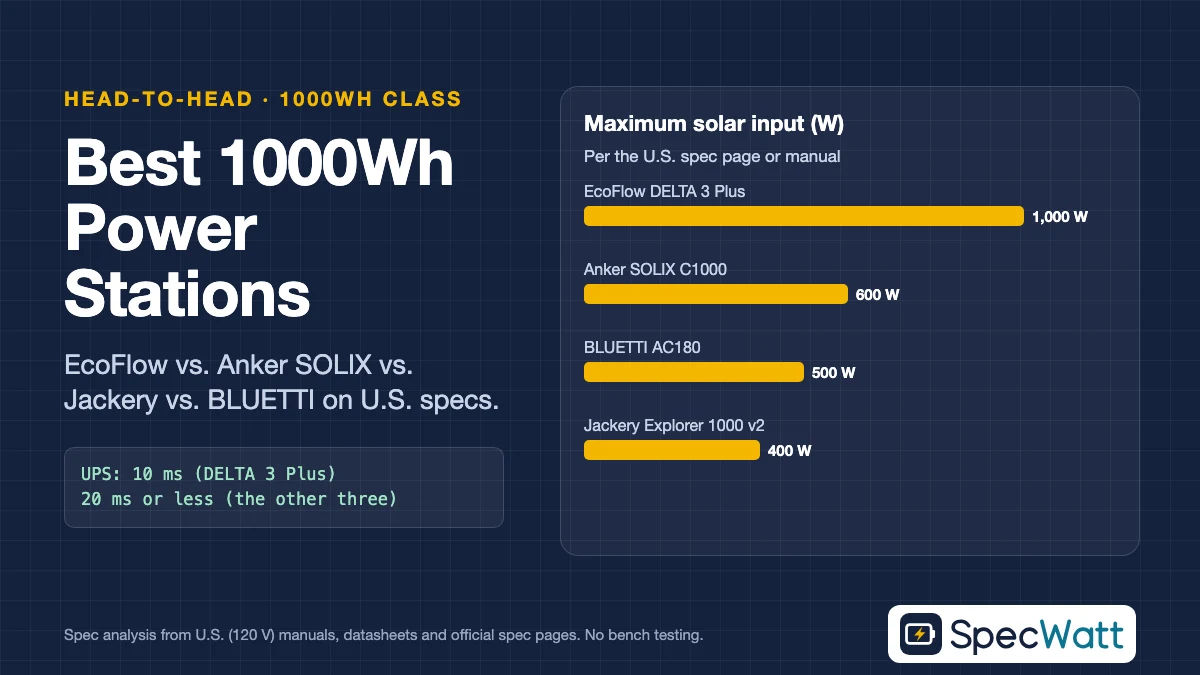
- Best OverallEcoFlow DELTA 3 PlusOutage backup and solar: the fastest published switchover here (10 ms) and the most solar input (1,000 W).Check Price for EcoFlow DELTA 3 Plus (opens Amazon in a new tab)
- Best ValueBLUETTI AC180Most runtime per dollar: the largest battery of the four (1,152 Wh) and the lowest price per Wh of the three priced on Nov 18, 2026 (about $0.48).Check Price for BLUETTI AC180 (opens Amazon in a new tab)
- Most PortableJackery Explorer 1000 v2Carrying it to camp: the lightest of the four at 23.8 lb, about 45 Wh per pound.Check Price for Jackery Explorer 1000 v2 (opens Amazon in a new tab)
Picks are based on the manufacturer specs and the math in this guide. Prices change often, so check the current price on Amazon.
The best 1000Wh portable power station for most buyers is the EcoFlow DELTA 3 Plus, because it pairs the fastest published UPS switchover in this group (10 ms) with the largest solar input (1,000 W). The BLUETTI AC180 is the value pick: it has the most capacity of the four (1,152 Wh) and had the lowest price per watt-hour of the three models priced on the makers’ U.S. stores on November 18, 2026 (Anker’s store didn’t list the original C1000 that day). The Jackery Explorer 1000 v2 is the lightest at 23.8 lb.
All four sit in the same 1000Wh portable power station class, so the differences are in the details: how fast they switch over in an outage, how much solar they accept, how quickly they refill from the wall and how much they weigh. We pulled each number from the U.S. edition of the manufacturer’s documentation, ran the same runtime formula our Power Station Runtime Calculator uses, and show the math so you can check it.
1000Wh Portable Power Station Comparison: Specs Side by Side
The table below lists the specs that change buying decisions in this class. Capacity is the rated battery size; AC output is the continuous rating at 120 V with the surge figure in parentheses; UPS switchover is the published time to move a plugged-in load from the wall to the battery.
Models at a glance
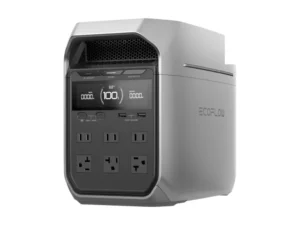
EcoFlow
DELTA 3 Plus
- Capacity1,024 Wh LFP
- AC output (120 V)1,800 W (3,600 W surge)
- Solar input2 × 500 W, 11–60 V (1,000 W)
Best for: Outage backup and solar: the fastest published switchover here (10 ms) and the most solar input (1,000 W).
Check Price on Amazon for EcoFlow DELTA 3 Plus (opens Amazon in a new tab)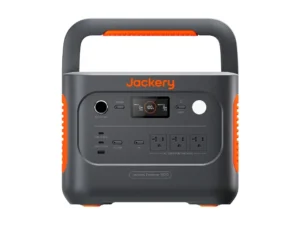
Jackery
Explorer 1000 v2
- Capacity1,070 Wh LiFePO4
- AC output (120 V)1,500 W (3,000 W peak)
- Solar input2 × 200 W, DC8020 (400 W)
Best for: Carrying it to camp: the lightest of the four at 23.8 lb, about 45 Wh per pound.
Check Price on Amazon for Jackery Explorer 1000 v2 (opens Amazon in a new tab)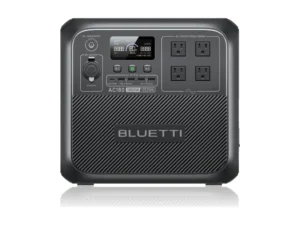
BLUETTI
AC180
- Capacity1,152 Wh LiFePO4
- AC output (120 V)1,800 W (2,700 W Power Lifting)
- Solar input500 W, DC7909, 12–60 V
Best for: Most runtime per dollar: the largest battery of the four (1,152 Wh) and the lowest price per Wh of the three priced on Nov 18, 2026 (about $0.48).
Check Price on Amazon for BLUETTI AC180 (opens Amazon in a new tab)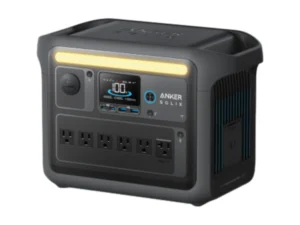
Anker SOLIX
C1000
- Capacity1,056 Wh LiFePO4
- AC output (120 V)1,800 W (2,400 W SurgePad)
- Solar input600 W, XT-60, 11–60 V
Best for: A two-panel series string: 600 W of solar input with 12.5 A from 32 to 60 V, and a UPS under 20 ms.
Check Price on Amazon for Anker SOLIX C1000 (opens Amazon in a new tab)Specs from each model's U.S. manual or official datasheet. Full comparison in the table below. As an Amazon Associate we earn from qualifying purchases.
| Model | Capacity | AC output (120 V) | Solar input | AC charging input | UPS switchover | Weight | Price |
|---|---|---|---|---|---|---|---|
| EcoFlow DELTA 3 Plus | 1,024 Wh LFP | 1,800 W (3,600 W surge) | 2 × 500 W, 11–60 V (1,000 W) | 1,500 W | 10 ms | 27.6 lb | Check Price for EcoFlow DELTA 3 Plus (opens Amazon in a new tab) |
| Anker SOLIX C1000 | 1,056 Wh LiFePO4 | 1,800 W (2,400 W SurgePad) | 600 W, XT-60, 11–60 V | 1,300 W max | Under 20 ms | 28.4 lb | Check Price for Anker SOLIX C1000 (opens Amazon in a new tab) |
| Jackery Explorer 1000 v2 | 1,070 Wh LiFePO4 | 1,500 W (3,000 W peak) | 2 × 200 W, DC8020 (400 W) | About 1,000 W | 20 ms | 23.8 lb | Check Price for Jackery Explorer 1000 v2 (opens Amazon in a new tab) |
| BLUETTI AC180 | 1,152 Wh LiFePO4 | 1,800 W (2,700 W Power Lifting) | 500 W, DC7909, 12–60 V | 1,440 W | 20 ms or less | 35.3 lb | Check Price for BLUETTI AC180 (opens Amazon in a new tab) |
Sources: EcoFlow U.S. DELTA 3 Plus spec page; Anker A1761 datasheet marked “Sales Market: US/CA”; Jackery U.S. JE-1000D specification page; BLUETTI AC180 user manual (120 VAC). BLUETTI’s 2,700 W Power Lifting mode is for resistive loads such as kettles, not motors, and Anker’s 2,400 W figure is its SurgePad rating. Specs checked November 18, 2026.
Read the capacity column with one caveat: a 1000Wh portable power station can’t deliver its full rating at the outlet. Our runtime math uses 85% of rated capacity as usable energy and adds inverter losses, which is why the runtimes below are shorter than “watt-hours divided by watts.”
The surge figures matter less than they look. A typical household refrigerator compressor should be within reach of all four, but check the startup rating on its nameplate, and remember that BLUETTI’s 2,700 W figure applies to resistive loads, not motors. None of them is meant for a well pump or central air conditioner. What separates them in practice is switchover speed, solar input and weight.
How Long a 1000Wh Portable Power Station Runs Common Loads
Runtime is where the capacity differences become hours. We used the same formula as our calculator: usable energy is 85% of rated capacity, and the load draws through an 85%-efficient inverter plus an assumed 10 W of inverter idle draw. The refrigerator row assumes a unit rated 600 kWh per year on its yellow EnergyGuide label, which averages about 68 W.
| Load (example, on AC) | DELTA 3 Plus | Anker C1000 | Jackery 1000 v2 | BLUETTI AC180 |
|---|---|---|---|---|
| Wi-Fi router and modem, 20 W | 26.0 h | 26.8 h | 27.1 h | 29.2 h |
| CPAP with humidifier and heated tube, 34 W | 17.4 h | 18.0 h | 18.2 h | 19.6 h |
| Refrigerator, 600 kWh/yr label (about 68 W average) | 9.6 h | 9.9 h | 10.0 h | 10.8 h |
| TV and streaming box, 100 W | 6.8 h | 7.0 h | 7.1 h | 7.7 h |
| Microwave drawing 1,500 W from the outlet | About 30 min | About 30 min | About 30 min (at its limit) | About 33 min |
Formula: hours = rated Wh × 0.85 ÷ (load W ÷ 0.85 + 10 W). The 10 W idle draw is our assumption, applied to all four for a like-for-like comparison: EcoFlow and Anker don’t publish it, while BLUETTI lists about 15 W for the AC180 and Jackery lists 18 W for the 1000 v2. With those published figures, the router row drops to about 25.4 h (AC180) and 21.9 h (Jackery), and the CPAP row to about 17.8 h and 15.7 h. The CPAP figure is ResMed’s published average for an AirSense 10 with humidifier and heated tube (doc. 1018673/1). Use your own appliance labels in the runtime calculator.
With the same 10 W idle assumption, the spread across the four models is about 12% at any load, because their capacities only range from 1,024 to 1,152 Wh. So if runtime is your only goal, no 1000Wh portable power station here is dramatically better than another, and a 2,000 Wh unit adds roughly 75% to 95% to every number in the table.
The microwave row is the one to watch. A microwave sold as “1,000 W” usually draws closer to 1,500 W from the outlet, so check the input rating on its nameplate. That load sits right at the Jackery 1000 v2’s 1,500 W limit and leaves almost no headroom.
Best Overall: EcoFlow DELTA 3 Plus
The DELTA 3 Plus is the 1000Wh portable power station to beat on the two specs that are hardest to fix after you buy: outage switchover and solar input. EcoFlow lists a 10 ms UPS switchover, half the 20 ms ceiling the other three publish (Anker lists under 20 ms, BLUETTI 20 ms or less, Jackery 20 ms), and two solar inputs rated 11–60 V at 500 W each, for 1,000 W in total. On paper, that is enough input to refill its 1,024 Wh battery in about an hour of full-rated sun; real panels deliver less, so treat it as headroom rather than a promise.
It also refills fastest from the wall, with 1,500 W of AC charging input; EcoFlow lists a full charge in 56 minutes. The trade-offs are capacity and price: it has the smallest battery of the four, and at $719 on EcoFlow’s U.S. store on November 18, 2026, it cost about $0.70 per rated watt-hour, the highest of the three models we could price that day.
Who should skip it: buyers who mainly want the most watt-hours per dollar, and anyone planning to carry it far, since it weighs 27.6 lb.
Best Value: BLUETTI AC180
In a DELTA 3 Plus vs. AC180 matchup, the AC180 has the larger battery (1,152 Wh vs. 1,024 Wh) and the same 1,800 W continuous AC rating as the DELTA 3 Plus and the C1000. At $549 on BLUETTI’s U.S. store on November 18, 2026, it worked out to about $0.48 per rated watt-hour, against $0.52 for the Jackery and $0.70 for the DELTA 3 Plus on the same date. Anker’s U.S. store didn’t list the original C1000 that day, so it isn’t part of this price comparison. Its manual also lists a switchover of 20 ms or less and up to 1,440 W of AC charging.
The compromises are physical and electrical. At 35.3 lb it is the heaviest model here, almost 7 lb more than the 28.4 lb Anker C1000, and its single DC7909 solar input tops out at 500 W and 10 A. Its manual also notes about 15 W of self-consumption with the inverter on, which matters most with small overnight loads.
Who should skip it: campers who carry the unit by hand, and anyone who wants more than 500 W of solar on one station.
Most Portable: Jackery Explorer 1000 v2
For a 1000Wh portable power station you’ll carry often, the Explorer 1000 v2 packs the most energy per pound: 1,070 Wh into 23.8 lb (about 45 Wh per pound). Jackery’s U.S. specification page lists 1,500 W of continuous AC output (3,000 W peak), a 20 ms UPS switchover and about 1.7 hours for an AC recharge. It was $559 on Jackery’s U.S. store on November 18, 2026, or about $0.52 per rated watt-hour.
Solar is its weak spot. The two DC8020 inputs accept 200 W each, 400 W combined, and 10.5 A per port between 16 and 60 V. That is less than half the DELTA 3 Plus’s limit, so even at the full 400 W a refill takes about 2.7 hours of rated sun (1,070 Wh ÷ 400 W), and real panels usually deliver less than their rating. Jackery also lists 18 W of standby consumption, so turn the AC output off when you aren’t using it.
Who should skip it: anyone who runs 1,500 W appliances regularly, and solar-first users who want to refill from panels in a few hours.
Also Worth Considering: Anker SOLIX C1000
The C1000 sits between the DELTA 3 Plus and the AC180 on almost every line of a 1000Wh power station spec sheet. Anker’s U.S./Canada datasheet lists 1,056 Wh of LiFePO4 rated for 3,000+ cycles to 80%, 1,800 W continuous (2,400 W SurgePad), a UPS switchover under 20 ms and one XT-60 solar input that accepts up to 600 W. Its solar current limit changes with voltage: 10 A from 11 to 32 V and 12.5 A from 32 to 60 V, so two panels in series make better use of it than a single low-voltage panel.
There is an availability caveat. On November 18, 2026, Anker’s U.S. store listed the C1000X (part number A1761111, which retailers file under the same A1761 model) and the newer C1000 Gen 2 rather than the original C1000. We haven’t verified the Gen 2’s specs here, so check the model number on any listing before you buy.
Who should skip it: anyone set on a specific part number, since Anker’s U.S. store listed the C1000X and the C1000 Gen 2, not the original C1000, on November 18, 2026.
How to Choose a 1000Wh Portable Power Station
Pick a 1000Wh portable power station by the job it has to do, not by the brand. For home backup with sensitive electronics, switchover time comes first, then capacity. For solar charging, look at the input watts and the voltage window, then confirm your panels fit them with our Voc & MPPT compatibility checker. For camping, weight and watt-hours per pound decide it.
- Outage backup for a router, CPAP or desktop PC: the DELTA 3 Plus, for its 10 ms switchover.
- Most runtime for the money: the AC180, with 1,152 Wh at the lowest cost per watt-hour of the three models priced on November 18, 2026.
- Carrying it to a campsite: the Explorer 1000 v2 at 23.8 lb.
- Larger solar arrays (over 500 W): the DELTA 3 Plus (1,000 W) or the C1000 (600 W).
The connectors matter too. EcoFlow and Anker use XT60-family plugs, BLUETTI’s AC180 uses DC7909 and Jackery uses DC8020. Our guide to solar panel connector types shows which adapter each station needs.
Why Capacity Isn’t the Whole Story
Two of these stations with the same watt-hours can feel very different in a real outage. The inverter’s idle draw runs whenever the AC output is on: BLUETTI lists about 15 W of self-consumption for the AC180 and Jackery lists 18 W of standby draw for the 1000 v2. Over a 10-hour night with a 20 W router, that idle draw can use almost as much energy as the router itself.
As a general rule, run small DC loads (phones, routers with a 12 V adapter, CPAPs with the maker’s DC cable; check your device manual and ask your equipment supplier) from the DC ports and save the inverter for loads that need 120 V AC. Our CPAP battery backup guide shows how much runtime that adds, and the home backup buying guide covers sizing for a refrigerator and a full outage day.
Frequently Asked Questions
For most buyers, the EcoFlow DELTA 3 Plus, because it has the fastest published UPS switchover (10 ms) and the largest solar input (1,000 W) in this group. If cost per watt-hour matters most, the BLUETTI AC180 had the lowest price per rated Wh of the three we could price on November 18, 2026.
About 10 hours for a refrigerator rated 600 kWh per year, using 85% usable capacity and 85% inverter efficiency plus an assumed 10 W of idle draw. A more efficient refrigerator runs longer; check the kWh/year figure on its EnergyGuide label.
Yes, if the microwave’s input rating stays below the station’s continuous AC rating. Most “1,000 W” microwaves draw about 1,500 W from the outlet, which fits the 1,800 W models here for roughly 30 minutes of cooking and is right at the Jackery 1000 v2’s 1,500 W limit.
All four models here use LiFePO4 (LFP). The three that publish a cycle rating in the documents we used list 3,000 to 4,000 cycles, while the lithium-ion Jackery Explorer 1000 Pro’s manual lists 1,000 cycles to 80%. LFP is usually heavier per watt-hour but tolerates daily cycling better.
Yes. Each one lists an automatic switchover: 10 ms for the DELTA 3 Plus and 20 ms or less for the other three. None of them is a zero-millisecond online UPS, so don’t rely on one alone for servers or life-support equipment; for a CPAP, check your device manual and ask your equipment supplier.