Quick Verdict: Top Picks
- Best OverallEcoFlow DELTA 3 PlusPublished LFP chemistry with 4,000 cycles to 80%+, the highest 80% rating among the in-stock LFP models here.Check Price for EcoFlow DELTA 3 Plus (opens Amazon in a new tab)
- Best ValueBLUETTI AC180The lowest cost per kWh cycled among in-stock models here (about $0.14 on Nov 19, 2026), with 3,500+ LiFePO4 cycles.Check Price for BLUETTI AC180 (opens Amazon in a new tab)
Picks are based on the manufacturer specs and the math in this guide. Prices change often, so check the current price on Amazon.
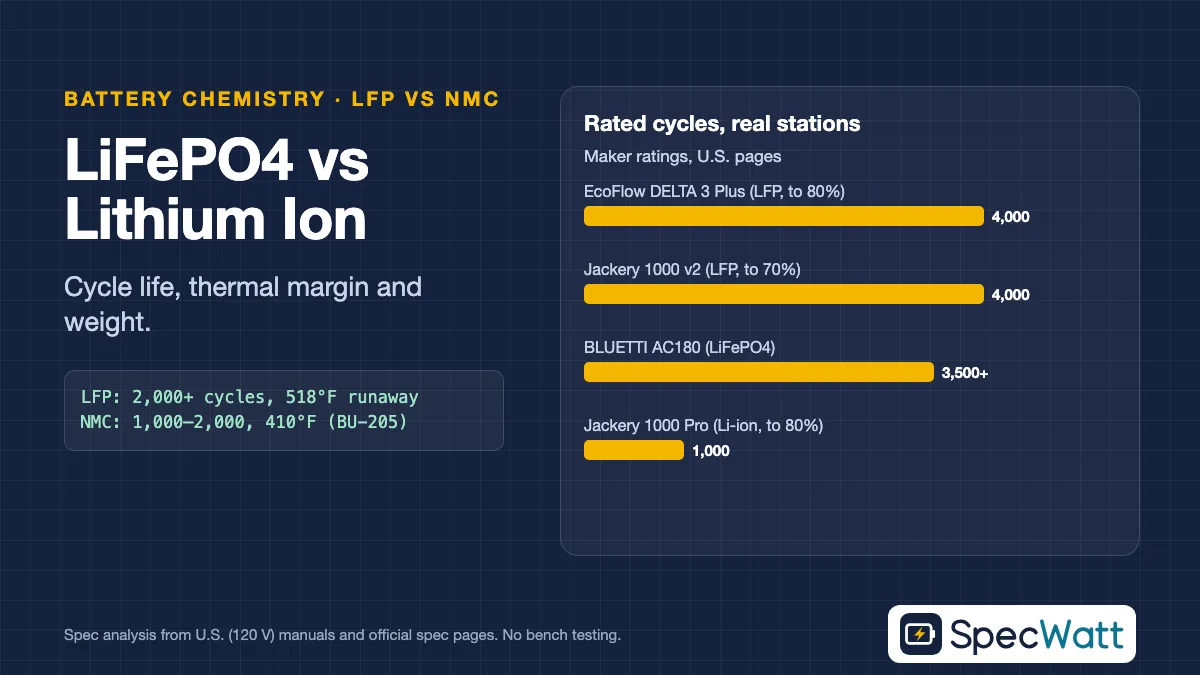
In the LiFePO4 vs lithium-ion debate, LiFePO4 (LFP) wins on cycle life and thermal safety, while NMC lithium-ion wins on weight per watt-hour at the cell level. Battery University lists 2,000+ cycles for LFP against 1,000–2,000 for NMC, and a thermal runaway point near 518°F (270°C) against about 410°F (210°C). For a power station you’ll keep for years, LFP is the better default.
There’s a naming trap first: LiFePO4 is a lithium-ion battery too. When people compare LiFePO4 vs lithium-ion, they almost always mean LFP against NMC (also written NCM), the nickel-based chemistry used in many EVs, power tools and older power stations. This guide compares the two on the numbers that matter for a station.
LiFePO4 vs Lithium Ion at a Glance
For LiFePO4 vs lithium ion batteries at the cell level, the table uses Battery University’s BU-205 figures. These are cell-level numbers; a finished power station adds a case, inverter and electronics, which changes the weight comparison more than the others.
| Property | LiFePO4 (LFP) | NMC lithium-ion |
|---|---|---|
| Nominal cell voltage | 3.20–3.30 V | 3.60–3.70 V |
| Specific energy (cell) | 90–120 Wh/kg | 150–220 Wh/kg |
| Cycle life (Battery University) | 2,000 and higher | 1,000–2,000 |
| Thermal runaway | About 518°F (270°C) | About 410°F (210°C) |
| Battery University note | “Very safe battery even if fully charged” | High charge promotes thermal runaway |
Source: Battery University, BU-205 “Types of Lithium-ion,” read November 19, 2026. Cycle life depends on depth of discharge and temperature.
The pattern is clear in this LFP vs NMC battery comparison. NMC packs more energy into each kilogram of cells, which is why nickel-based cells are common in EVs and portable gear where weight is everything. LFP gives up some of that density for a longer life and a much wider safety margin, which is why nearly every current power station we cover uses it.
Cycle Life: What 1,000 vs 4,000 Cycles Means in Years
In LiFePO4 vs lithium ion cycle ratings, a cycle is one full discharge and recharge, and makers rate cycles to a stated remaining capacity, usually 70% or 80%. EcoFlow rates the DELTA 3 Plus at 4,000 cycles to 80% or more, and Jackery rates the Explorer 1000 v2 at 4,000 cycles to 70% or more. Jackery’s older Explorer 1000 Pro, which its U.S. manual lists as lithium-ion, is rated for 1,000 cycles to 80% or more.
In years, daily cycling uses 365 cycles a year: 1,000 cycles last about 2.7 years and 3,000 cycles about 8.2 years. As a general rule, outage-only use (we assume 10 to 30 full cycles a year) won’t reach either chemistry’s cycle rating, so age, heat and storage become the limits. The cycle gap matters most if you’ll cycle the station daily with solar.
Thermal Safety: Why LFP Has More Margin
Thermal runaway is a chain reaction in which a damaged or overheated cell heats itself faster than it can shed heat, sometimes ending in fire. Battery University puts the runaway threshold for LFP near 518°F (270°C) and for NMC near 410°F (210°C), and notes that a high state of charge promotes runaway in NMC. That gap is the core of the LiFePO4 vs lithium ion safety argument.
Chemistry isn’t the whole LiFePO4 vs lithium ion battery story. A well-designed NMC pack with good cell monitoring can be safe, and a damaged LFP pack still needs care. As a general rule, store any station in a cool, dry place away from heat sources, don’t charge a station that’s been dropped or swollen, and look for UL 2743, the U.S. safety standard for portable power packs, on the listing or label.
Charging in the Cold
As a general rule, neither chemistry should be charged below freezing, and power stations enforce this with a charging temperature window. EcoFlow lists a 32–113°F (0–45°C) charging range for the DELTA 3 Max, and Anker lists 32–104°F for the SOLIX C1000 Gen 2. Anker also notes its UltraFast charging slows sharply below 68°F, a reminder that cold affects charge speed before it blocks charging entirely.
If you keep a station in a garage or an RV, bring it inside before charging in winter. As a general rule, stations allow discharging at colder temperatures than charging; EcoFlow lists discharge down to 14°F (−10°C) for the DELTA 3 Max.
Weight: Cell Density vs Real Stations
At the cell level, NMC stores roughly 1.8 times more energy per kilogram than LFP at the midpoints of Battery University’s ranges (150–220 vs 90–120 Wh/kg). That’s the classic case for NMC: an NMC station of the same capacity can be lighter.
As a general rule, real stations narrow the gap, because the case, inverter and cooling add weight regardless of chemistry. Among current LFP models, energy per pound ranges from about 32.6 Wh/lb (BLUETTI AC180) to about 45 Wh/lb (Jackery Explorer 1000 v2), a spread driven as much by design as by cells. We couldn’t confirm the weight of a current NMC station from a U.S. manual, so we don’t put a side-by-side number on it.
Cost Per Cycle: The Number That Favors LFP
In any LiFePO4 vs lithium ion battery purchase, price per watt-hour tells you what a station costs today; price per cycle tells you what each full refill costs over its rated life. The formula is simple: price ÷ (capacity in kWh × rated cycles). It ignores fade toward the end of life, so treat it as a comparison tool, not a forecast. On November 19, 2026, the makers’ U.S. stores listed the BLUETTI AC180 at $549, the EcoFlow DELTA 2 Max at $1,029 and the EcoFlow DELTA 3 Plus at $719; the table divides each price by the station’s rated lifetime kWh.
| Station (chemistry, capacity) | Rated cycles | Lifetime kWh (capacity × cycles) | Cost per kWh cycled (Nov 19, 2026) |
|---|---|---|---|
| BLUETTI AC180 (LiFePO4, 1,152 Wh) | 3,500+ | About 4,032 kWh | About $0.14 |
| EcoFlow DELTA 2 Max (LFP, 2,048 Wh) | 3,000 to 80%+ | About 6,144 kWh | About $0.17 |
| EcoFlow DELTA 3 Plus (LFP, 1,024 Wh) | 4,000 to 80%+ | About 4,096 kWh | About $0.18 |
| Hypothetical NMC station (same price and capacity as the DELTA 3 Plus) | 1,000 | About 1,024 kWh | About $0.70 |
Cost per kWh cycled = price ÷ (rated kWh × rated cycles), using the maker’s U.S. store price on November 19, 2026. The NMC row is an illustration with a 1,000-cycle rating, not a real product.
At the same price and capacity, a 1,000-cycle battery costs four times as much per kWh cycled as a 4,000-cycle one. That’s a practical argument in the LiFePO4 vs lithium ion choice for anyone who’ll cycle a station with solar every day.
LFP Power Stations We Cover
Among LiFePO4 vs lithium ion stations, every current station in our guides lists LFP or LiFePO4, except the Anker SOLIX C1000 Gen 2, whose U.S. and Canadian pages don’t state the cell chemistry, and two refurbished-only Jackery models, the Explorer 1000 Pro and Explorer 2000 Plus, whose U.S. manuals say only “lithium-ion” without naming the cathode. The cards below compare their chemistry and cycle ratings.
Models at a glance
EcoFlow
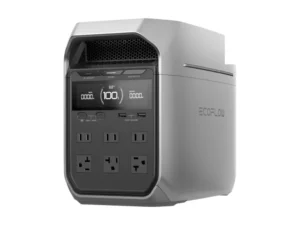
DELTA 3 Plus
- Capacity1,024 Wh
- ChemistryLFP
- Cycle rating4,000 to 80%+
Best for: Published LFP chemistry with 4,000 cycles to 80%+, the highest 80% rating among the in-stock LFP models here.
Check Price on Amazon for EcoFlow DELTA 3 Plus (opens Amazon in a new tab)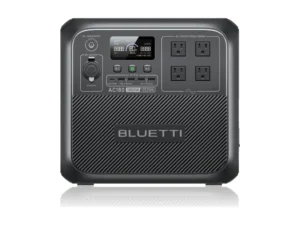
BLUETTI
AC180
- Capacity1,152 Wh
- ChemistryLiFePO4
- Cycle rating3,500+
Best for: The lowest cost per kWh cycled among in-stock models here (about $0.14 on Nov 19, 2026), with 3,500+ LiFePO4 cycles.
Check Price on Amazon for BLUETTI AC180 (opens Amazon in a new tab)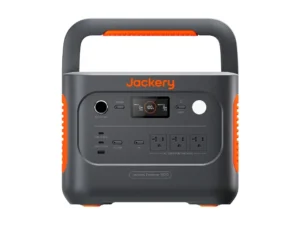
Jackery
Explorer 1000 v2
- Capacity1,070 Wh
- ChemistryLiFePO4
- Cycle rating4,000 to 70%+
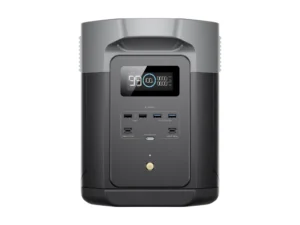
EcoFlow
DELTA 2 Max
- Capacity2,048 Wh
- ChemistryLFP
- Cycle rating3,000 to 80%+
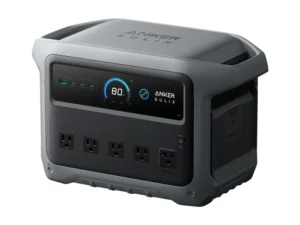
Anker SOLIX
C1000 Gen 2
- Capacity1,024 Wh
- ChemistryNot published by Anker
- Cycle rating4,000 to 80%
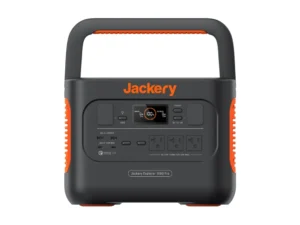
Jackery
Explorer 1000 Pro
- Capacity1,002 Wh
- ChemistryLithium-ion (per manual)
- Cycle rating1,000 to 80%+
Specs from each model's U.S. manual or official datasheet. Full comparison in the table below. As an Amazon Associate we earn from qualifying purchases.
| Model | Capacity | Chemistry | Cycle rating | Energy per pound | Price |
|---|---|---|---|---|---|
| EcoFlow DELTA 3 Plus | 1,024 Wh | LFP | 4,000 to 80%+ | About 37.1 Wh/lb | Check Price for EcoFlow DELTA 3 Plus (opens Amazon in a new tab) |
| BLUETTI AC180 | 1,152 Wh | LiFePO4 | 3,500+ | About 32.6 Wh/lb | Check Price for BLUETTI AC180 (opens Amazon in a new tab) |
| Jackery Explorer 1000 v2 | 1,070 Wh | LiFePO4 | 4,000 to 70%+ | About 45.0 Wh/lb | Check Price for Jackery Explorer 1000 v2 (opens Amazon in a new tab) |
| EcoFlow DELTA 2 Max | 2,048 Wh | LFP | 3,000 to 80%+ | About 41.0 Wh/lb | Check Price for EcoFlow DELTA 2 Max (opens Amazon in a new tab) |
| Anker SOLIX C1000 Gen 2 | 1,024 Wh | Not published by Anker | 4,000 to 80% | About 41.1 Wh/lb | Check Price for Anker SOLIX C1000 Gen 2 (opens Amazon in a new tab) |
| Jackery Explorer 1000 Pro | 1,002 Wh | Lithium-ion (per manual) | 1,000 to 80%+ | Not recorded | Check Price for Jackery Explorer 1000 Pro (opens Amazon in a new tab) |
Sources: EcoFlow U.S. spec pages and DELTA 2 Max manual (EFD350); BLUETTI AC180 U.S. Tech Specs; Jackery U.S. Tech Specs (1000 v2) and Explorer 1000 Pro U.S. manual; Anker SOLIX C1000 Gen 2 U.S. Specs tab. Checked November 19, 2026.
Award criteria. Best Overall needs published LFP chemistry, the highest cycle rating at 80% remaining capacity and stock at the maker’s U.S. store on November 19, 2026; the DELTA 3 Plus wins with 4,000 cycles to 80%, while the C1000 Gen 2 matches the rating but Anker doesn’t publish its chemistry. Best Value is the lowest cost per kWh cycled among models in stock that day, and the AC180 wins at about $0.14. The Explorer 1000 v2 (sold out on Jackery’s U.S. store, about $0.13 at $559) and the C1000 Gen 2 (not on the in-stock list we checked; about $0.13 at its $529.99 pre-order price) carry no award; the Explorer also has the most energy per pound of the five with a published weight.
Read the full DELTA 3 Plus review or AC180 review for runtime and charging.
Our Verdict
For a portable power station, LiFePO4 is the better choice for almost everyone: longer cycle life, a higher thermal runaway threshold and, at the same price and capacity, a lower cost per kWh cycled. NMC lithium-ion still makes sense where every pound counts, though as a general rule the case and inverter shrink the station-level gap compared with cell specs. In the LiFePO4 vs lithium ion choice, pick LFP unless weight is your top priority.
If you’re choosing a size next, our sizing guide turns your loads into watt-hours, and our 1000Wh comparison lines up the 1,000 Wh LFP models we cover on U.S. specs.
Frequently Asked Questions
LiFePO4 is a type of lithium-ion. Compared with NMC lithium-ion, it lasts more cycles (2,000+ vs 1,000–2,000 per Battery University) and has a higher thermal runaway threshold (about 518°F vs 410°F), but it stores less energy per kilogram.
LFP uses lithium iron phosphate in the cathode at about 3.2–3.3 V per cell; NMC uses nickel, manganese and cobalt at about 3.6–3.7 V. NMC is denser; LFP lasts longer and has more thermal margin.
At one full cycle a day, a 3,000-cycle rating lasts about 8.2 years and a 4,000-cycle rating about 11 years before reaching the rated remaining capacity. Occasional outage use stretches that further.
Battery University calls LFP a “very safe battery even if fully charged,” with thermal runaway near 518°F (270°C) versus about 410°F (210°C) for NMC. Design, cell monitoring and certification such as UL 2743 still matter.
LFP cells hold about 90–120 Wh/kg against 150–220 Wh/kg for NMC, per Battery University. As a general rule, case and inverter weight narrow the gap at the station level; the LFP models we cover range from about 32.6 to 45 Wh per pound.