Quick Verdict: Top Picks
- Best OverallBLUETTI AC200L1,200 W of solar, 2,400 W of AC charging and a 20 ms or faster switchover, at about $0.44 per Wh on Nov 18, 2026.Check Price for BLUETTI AC200L (opens Amazon in a new tab)
- Most PortableEcoFlow DELTA 2 MaxThe same 2,048 Wh and 2,400 W in 50 lb, 12.4 lb lighter.Check Price for EcoFlow DELTA 2 Max (opens Amazon in a new tab)
Picks are based on the manufacturer specs and the math in this guide. Prices change often, so check the current price on Amazon.
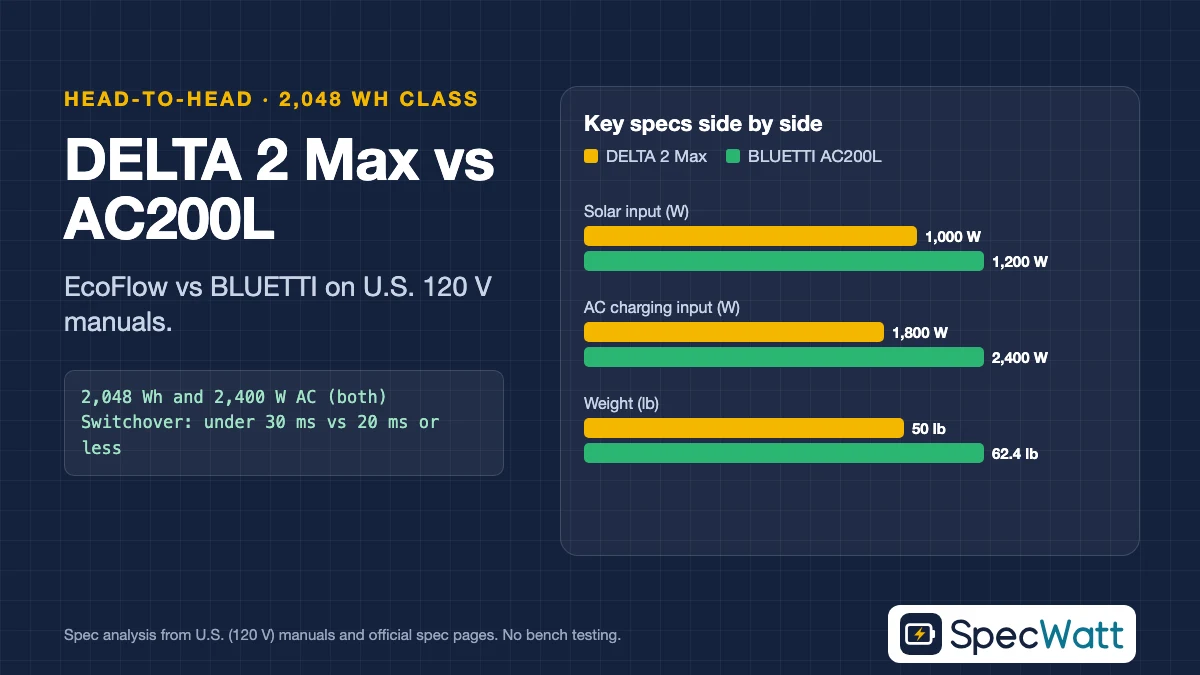
In the DELTA 2 Max vs BLUETTI AC200L matchup, the AC200L wins on most specs: more solar input (1,200 W vs. 1,000 W), faster AC charging (2,400 W vs. 1,800 W), a quicker switchover (20 ms or less vs. under 30 ms), expansion to 8,192 Wh per its manual and a lower price per watt-hour on November 18, 2026. The EcoFlow DELTA 2 Max is the better pick if you’ll move it often, because it weighs 12.4 lb less.
Both hold exactly 2,048 Wh of LFP and deliver 2,400 W of continuous AC power at 120 V, so under our runtime formula they run any load for the same time. The EcoFlow DELTA 2 Max vs BLUETTI AC200L decision comes down to charging, weight and price, and we took every number from the U.S. edition of each maker’s manual or spec page.
Category Winners: DELTA 2 Max vs BLUETTI AC200L at a Glance
The table names a winner in each category of the DELTA 2 Max vs BLUETTI AC200L comparison and the published spec that decides it. Prices come from each maker’s U.S. store on November 18, 2026, and specs from the manuals listed under the next table.
| Category | Winner | Deciding spec |
|---|---|---|
| Best Overall | BLUETTI AC200L | More solar input, faster AC charging, faster switchover and a lower price per Wh |
| Solar input | BLUETTI AC200L | 1,200 W at 12–145 V vs. 2 × 500 W at 11–60 V |
| Price per Wh | BLUETTI AC200L | Lower cost per rated Wh on Nov 18, 2026 (prices in the model sections) |
| Most Portable | EcoFlow DELTA 2 Max | 50 lb vs. 62.4 lb |
| Who should skip the AC200L | Anyone who needs to lift the unit often or into a vehicle | 62.4 lb, 12.4 lb more than the DELTA 2 Max |
| Who should skip the DELTA 2 Max | Desktop PC or NAS owners who need the fastest switchover | EPS listed at under 30 ms vs. 20 ms or less |
The AC200L takes three of the four categories, and the margin on price is meaningful: about $130 less on November 18, 2026 for the same capacity and AC rating. The DELTA 2 Max’s one win, weight, decides it for buyers who will carry the unit between home and an RV or campsite.
Both sit in the 2,000 Wh class. At 2,048 Wh each, they keep a 600 kWh/year refrigerator running for about 19 hours, roughly double what a 1,000 Wh unit manages, which is why this size class is where whole-day outage plans start.
Specs Side by Side
Here is the DELTA 2 Max vs BLUETTI AC200L spec sheet side by side. Capacity is the rated battery size, AC output is the continuous rating at 120 V with the short-term rating in parentheses, and switchover is the published time to move a plugged-in load from the wall to the battery.
Models at a glance
BLUETTI
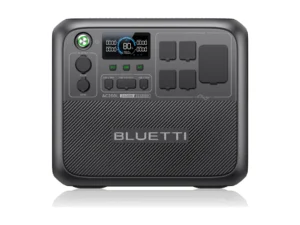
AC200L
- Capacity2,048 Wh LiFePO4
- AC output (120 V)2,400 W (up to 3,000 W for 2 min)
- Solar input1,200 W, 12–145 V, 15 A
Best for: 1,200 W of solar, 2,400 W of AC charging and a 20 ms or faster switchover, at about $0.44 per Wh on Nov 18, 2026.
Check Price on Amazon for BLUETTI AC200L (opens Amazon in a new tab)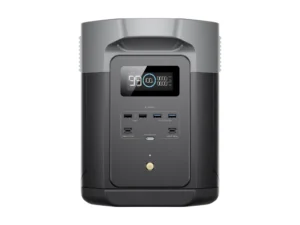
EcoFlow
DELTA 2 Max
- Capacity2,048 Wh LFP
- AC output (120 V)2,400 W (4,800 W surge)
- Solar input2 × 500 W, 11–60 V, 15 A (1,000 W)
Best for: The same 2,048 Wh and 2,400 W in 50 lb, 12.4 lb lighter.
Check Price on Amazon for EcoFlow DELTA 2 Max (opens Amazon in a new tab)Specs from each model's U.S. manual or official datasheet. Full comparison in the table below. As an Amazon Associate we earn from qualifying purchases.
| Model | Capacity | AC output (120 V) | Solar input | AC charging input | Outage switchover | Weight | Price |
|---|---|---|---|---|---|---|---|
| BLUETTI AC200L | 2,048 Wh LiFePO4 | 2,400 W (up to 3,000 W for 2 min) | 1,200 W, 12–145 V, 15 A | 2,400 W (120 V, 20 A max) | 20 ms or less | 62.4 lb | Check Price for BLUETTI AC200L (opens Amazon in a new tab) |
| EcoFlow DELTA 2 Max | 2,048 Wh LFP | 2,400 W (4,800 W surge) | 2 × 500 W, 11–60 V, 15 A (1,000 W) | 1,800 W | EPS, under 30 ms | 50 lb | Check Price for EcoFlow DELTA 2 Max (opens Amazon in a new tab) |
Sources: BLUETTI AC200L user manual V3.0 (120 VAC edition); EcoFlow DELTA 2 Max user manual and U.S. spec page. BLUETTI lists overload ratings of 2,520–3,000 W for 2 minutes and 3,000–3,600 W for 5 seconds, plus a Power Lifting mode up to 3,600 W for resistive loads only. EcoFlow lists 3,000 cycles to 80% for the DELTA 2 Max. Specs checked November 18, 2026.
The surge figures aren’t directly comparable. EcoFlow lists a 4,800 W surge, while BLUETTI publishes timed overload windows instead of a single surge number; both comfortably cover a household refrigerator or a well-sized microwave, but neither is meant for central air.
The AC200L’s manual also lists a combined limit worth knowing: AC plus DC/solar input tops out at 2,400 W together. Charging from the wall and panels at the same time doesn’t add up beyond that ceiling.
Runtime Compared at 120 V
Runtime is a tie in the DELTA 2 Max vs BLUETTI AC200L comparison because capacity is identical. Our formula: 85% of rated capacity is usable, and AC loads draw through an 85%-efficient inverter plus an assumed 10 W of idle draw. Neither maker publishes an idle figure in the documents we used.
| Load (example, on AC) | DELTA 2 Max | BLUETTI AC200L |
|---|---|---|
| Wi-Fi router and modem, 20 W | 51.9 h | 51.9 h |
| CPAP with humidifier and heated tube, 34 W | 34.8 h | 34.8 h |
| Refrigerator, 600 kWh/yr label (about 68 W average) | 19.2 h | 19.2 h |
| TV and streaming box, 100 W | 13.6 h | 13.6 h |
| Microwave drawing 1,500 W from the outlet | About 1 h | About 1 h |
Formula: hours = rated Wh × 0.85 ÷ (load W ÷ 0.85 + 10 W). The CPAP figure is ResMed’s published average for an AirSense 10 with humidifier and heated tube (doc. 1018673/1). Use your own appliance labels in the runtime calculator.
Matching runtimes shift the decision to how quickly each one refills. Over a multi-day outage, the station that recovers more energy from the sun each day effectively runs longer, and that’s where the AC200L pulls ahead.
For a refrigerator plus essentials, our home backup guide works out about 14 hours on 2,048 Wh. Both of these need a recharge source for anything longer than a day.
Solar and Wall Charging Compared
In the AC200L vs DELTA 2 Max charging matchup, the AC200L accepts 1,200 W on one input across a wide 12–145 V window at up to 15 A. That high voltage ceiling lets you wire more panels in series than a 60 V input allows, and at the full 1,200 W a refill takes about 1.7 hours of rated sun. BLUETTI’s manual warns never to exceed 145 V open-circuit voltage, so check cold-weather Voc with our Voc & MPPT compatibility checker.
The DELTA 2 Max splits its 1,000 W across two inputs of 500 W each at 11–60 V and 15 A, about 2 hours at full rated input. On the wall, the AC200L’s Turbo mode lists 2,400 W (0–80% in 60 minutes) at up to 20 A, more than a standard 15 A household circuit supplies at 120 V. Its manual also lists a Standard mode at 1,200 W and a Silent mode at 800 W, which suit a typical 15 A outlet. The DELTA 2 Max’s 1,800 W works out to about 15 A, so give it a circuit with nothing else running.
Scenario Breakdown: Which One for Your Situation
Pick by the job you need the station to do, not by brand loyalty. For each common scenario, the table names the better pick in the EcoFlow DELTA 2 Max vs BLUETTI AC200L choice and the published spec behind it.
| Scenario | Better pick | Why |
|---|---|---|
| Whole-day home backup with solar | BLUETTI AC200L | 1,200 W of solar and a higher voltage window |
| Desktop PC or network gear | BLUETTI AC200L | 20 ms or less vs. under 30 ms (neither is an online UPS) |
| RV or trailer, moved often | EcoFlow DELTA 2 Max | 12.4 lb lighter |
| Growing into a bigger battery bank | BLUETTI AC200L | Expandable to 8,192 Wh per its manual |
| Recharging on a standard 15 A outlet | EcoFlow DELTA 2 Max | 1,800 W is about 15 A at 120 V vs. 20 A for the AC200L in Turbo mode |
| Lowest price per Wh | BLUETTI AC200L | Lower cost per rated Wh on Nov 18, 2026 (see the model sections) |
For CPAP users, both run a 34 W CPAP for about 35 hours, but check your device manual and talk to your doctor or equipment supplier before relying on battery power. For safe home connection, never backfeed through a wall outlet; a transfer switch must be installed by a licensed electrician.
The table shows a clear split. If the station stays in one place, the AC200L is the stronger buy; if it travels with you, the DELTA 2 Max’s lower weight and lower wall-charging draw carry real value, especially for RV owners who load it in and out every trip.
BLUETTI AC200L: Who It’s For
The AC200L suits fixed home backup and solar-heavy setups. Its manual lists 2,048 Wh of LiFePO4 expandable to 8,192 Wh, 2,400 W of AC output, a 12 V/10 A car port, two 100 W USB-C ports, a 48 V DC port and a switchover of 20 ms or less. BLUETTI’s store lists a 5-year warranty.
At $899 on BLUETTI’s U.S. store on November 18, 2026, it cost about $0.44 per rated watt-hour, the lowest of the models whose U.S. store prices we recorded that day. Its weak points are its 62.4 lb weight and a 2,400 W Turbo charging mode that needs a 20 A circuit at 120 V.
Who should skip it: anyone who lifts the station often, and buyers who need fast wall charging on an ordinary 15 A outlet.
EcoFlow DELTA 2 Max: Who It’s For
The DELTA 2 Max suits buyers who want 2,048 Wh they can still move. Its manual lists 2,048 Wh of LFP rated for 3,000 cycles to 80%, 2,400 W of AC output (4,800 W surge), an EPS switchover under 30 ms, 1,800 W of AC charging and a 12.6 V/10 A car port, in about 50 lb.
It was $1,029 on EcoFlow’s U.S. store on November 18, 2026, about $0.50 per rated watt-hour, and EcoFlow sells it in a bundle with a DELTA 2 Max Smart Extra Battery for 4 kWh in total. It’s our pick for long outages in the EcoFlow vs Jackery vs BLUETTI vs Anker SOLIX comparison.
Who should skip it: owners of desktop PCs or network storage that reboot on a 30 ms gap, and solar users who want more than 1,000 W of input.
Also Consider: Jackery Explorer 2000 Plus
If neither side of the DELTA 2 Max vs BLUETTI AC200L matchup fits, the Jackery Explorer 2000 Plus lists 2,042.8 Wh, 3,000 W of continuous AC output and a 20 ms EPS in its U.S. manual, at about 61.5 lb. The catch is availability: on November 18, 2026, Jackery’s U.S. store listed it only as a refurbished unit, at $1,999, which is far above both models here.
That makes it a niche pick for buyers who need more than 2,400 W of continuous output. For the brand-level view, see EcoFlow vs Jackery vs BLUETTI vs Anker SOLIX.
Our Verdict
For most buyers, the AC200L wins the DELTA 2 Max vs BLUETTI AC200L comparison: same 2,048 Wh and 2,400 W, but more solar input, faster charging, a faster switchover, expansion to 8,192 Wh and about $130 less on November 18, 2026. Choose the DELTA 2 Max if you’ll move the station often, since it’s 12.4 lb lighter and draws less from the wall (1,800 W vs. 2,400 W in Turbo).
For more context on sizing a station this big, read our home backup guide, or compare smaller options in the 1000Wh comparison.
Frequently Asked Questions
For a station that stays put, the AC200L: 1,200 W of solar vs. 1,000 W, 2,400 W of AC charging vs. 1,800 W, 20 ms or less vs. under 30 ms, and a lower price per Wh on Nov 18, 2026. The DELTA 2 Max is 12.4 lb lighter.
Yes. Both list 2,048 Wh of LFP and 2,400 W of continuous AC output at 120 V. Under our formula, both run a 600 kWh/year refrigerator for about 19 hours and a 34 W CPAP for about 35 hours.
Yes. Its 2,400 W Turbo mode draws up to 20 A at 120 V, more than a 15 A circuit supplies, so use the manual’s 1,200 W Standard or 800 W Silent mode on a typical outlet, or a dedicated 20 A circuit for Turbo.
The AC200L takes up to 1,200 W at 12–145 V and 15 A on one input. The DELTA 2 Max takes 500 W on each of two inputs at 11–60 V. Check each string’s cold-weather Voc against those limits before wiring.
Yes. BLUETTI’s manual lists expansion up to 8,192 Wh for the AC200L with its expansion batteries. EcoFlow’s U.S. store listed the DELTA 2 Max with a Smart Extra Battery as a 4 kWh bundle on November 18, 2026.