Quick Verdict: Top Picks
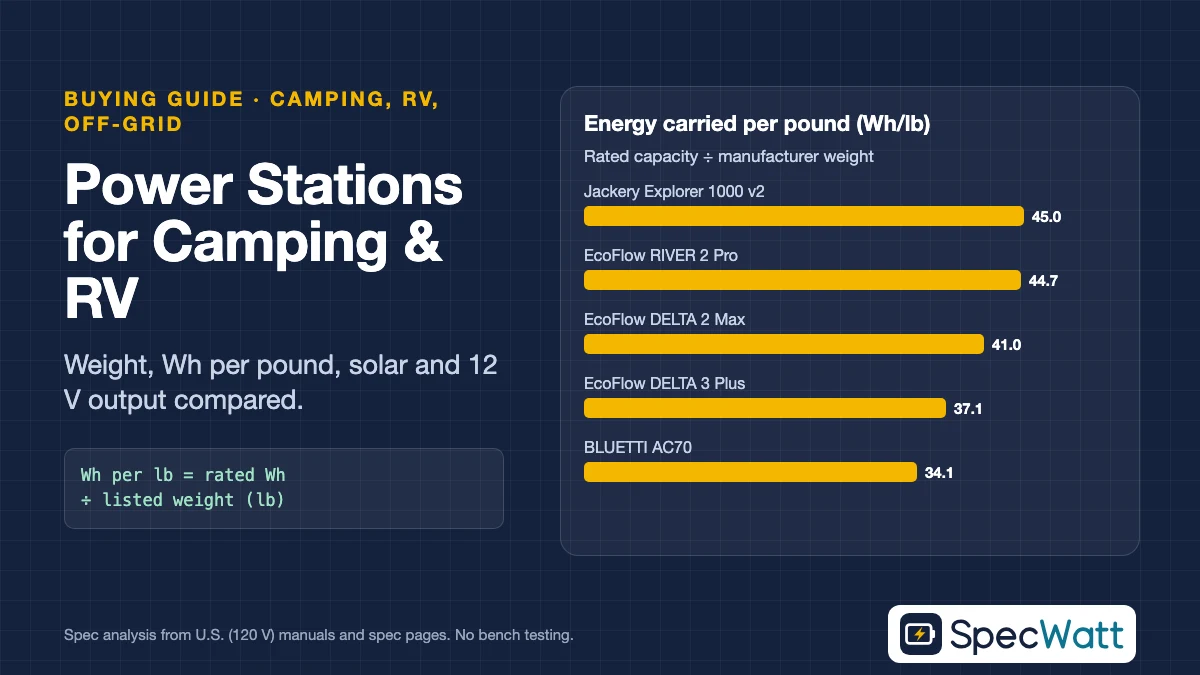
- Best for CampingJackery Explorer 1000 v2The most energy per pound here (45 Wh/lb): about 1.2 days of the example camp load in 23.8 lb.Check Price for Jackery Explorer 1000 v2 (opens Amazon in a new tab)
- Best LightweightEcoFlow RIVER 2 ProThe lightest model here at 17.2 lb; one 200 W panel fits its 220 W solar input.Check Price for EcoFlow RIVER 2 Pro (opens Amazon in a new tab)
- Best for Off-Grid SolarEcoFlow DELTA 3 PlusThe most solar per Wh here: 1,000 W of input on a 1,024 Wh battery.Check Price for EcoFlow DELTA 3 Plus (opens Amazon in a new tab)
- Best for RVEcoFlow DELTA 2 MaxThe most capacity and AC power here: 2,048 Wh and 2,400 W, about 2.4 days of the example load.Check Price for EcoFlow DELTA 2 Max (opens Amazon in a new tab)
Picks are based on the manufacturer specs and the math in this guide. Prices change often, so check the current price on Amazon.
The best portable power station for camping is the one that carries the most energy per pound for the loads you bring, and the Jackery Explorer 1000 v2 leads that measure at about 45 Wh per pound. If weight is everything, the 17.2 lb EcoFlow RIVER 2 Pro is the lightest model here. For solar-first off-grid trips, the EcoFlow DELTA 3 Plus accepts 1,000 W of panels, and for an RV the 2,048 Wh EcoFlow DELTA 2 Max has the most capacity.
A portable power station for camping has different priorities from one for home backup. You carry the unit, you run more loads from 12 V than from 120 V, and you recharge from the sun or the car rather than the wall. We compared five models on those terms using U.S. manuals and spec pages, and the math below shows how many days each one covers.
Quick Comparison: Choosing a Portable Power Station for Camping by the Numbers
The first three columns are the ones campers ask about most: how heavy the unit is, how much energy it holds and how much energy you get per pound carried. The last three cover recharging from solar, running 12 V gear and the AC limit at 120 V.
Models at a glance
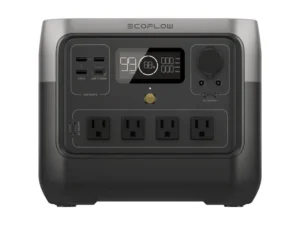
EcoFlow
RIVER 2 Pro
- Weight17.2 lb
- Capacity768 Wh LFP
- Wh per lb44.7
Best for: The lightest model here at 17.2 lb; one 200 W panel fits its 220 W solar input.
Check Price on Amazon for EcoFlow RIVER 2 Pro (opens Amazon in a new tab)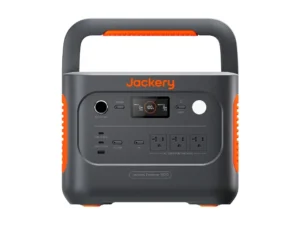
Jackery
Explorer 1000 v2
- Weight23.8 lb
- Capacity1,070 Wh LiFePO4
- Wh per lb45.0
Best for: The most energy per pound here (45 Wh/lb): about 1.2 days of the example camp load in 23.8 lb.
Check Price on Amazon for Jackery Explorer 1000 v2 (opens Amazon in a new tab)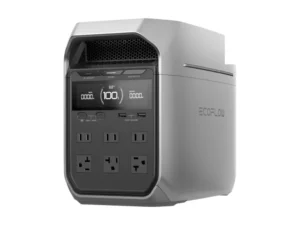
EcoFlow
DELTA 3 Plus
- Weight27.6 lb
- Capacity1,024 Wh LFP
- Wh per lb37.1
Best for: The most solar per Wh here: 1,000 W of input on a 1,024 Wh battery.
Check Price on Amazon for EcoFlow DELTA 3 Plus (opens Amazon in a new tab)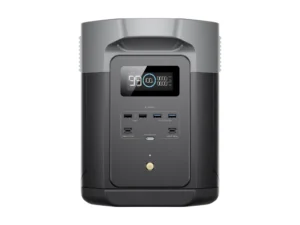
EcoFlow
DELTA 2 Max
- Weight50 lb
- Capacity2,048 Wh LFP
- Wh per lb41.0
Best for: The most capacity and AC power here: 2,048 Wh and 2,400 W, about 2.4 days of the example load.
Check Price on Amazon for EcoFlow DELTA 2 Max (opens Amazon in a new tab)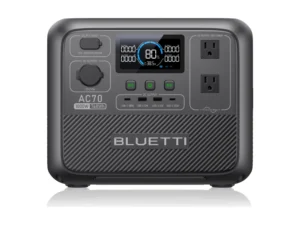
BLUETTI
AC70
- Weight22.5 lb
- Capacity768 Wh LiFePO4
- Wh per lb34.1
Best for: Budget solar camping: 500 W of solar input on 768 Wh, $359 on BLUETTI's U.S. store on Nov 18, 2026.
Check Price on Amazon for BLUETTI AC70 (opens Amazon in a new tab)Specs from each model's U.S. manual or official datasheet. Full comparison in the table below. As an Amazon Associate we earn from qualifying purchases.
| Model | Weight | Capacity | Wh per lb | Solar input | 12 V car port | AC output (120 V) | Price |
|---|---|---|---|---|---|---|---|
| EcoFlow RIVER 2 Pro | 17.2 lb | 768 Wh LFP | 44.7 | 220 W, XT60, 11–50 V, 13 A | 12.6 V, 10 A (126 W) | 800 W (1,600 W surge) | Check Price for EcoFlow RIVER 2 Pro (opens Amazon in a new tab) |
| BLUETTI AC70 | 22.5 lb | 768 Wh LiFePO4 | 34.1 | 500 W, XT60, 12–58 V, 10 A | 12 V, 10 A | 1,000 W | Check Price for BLUETTI AC70 (opens Amazon in a new tab) |
| Jackery Explorer 1000 v2 | 23.8 lb | 1,070 Wh LiFePO4 | 45.0 | 2 × 200 W, DC8020 (400 W) | 12 V, 10 A | 1,500 W (3,000 W peak) | Check Price for Jackery Explorer 1000 v2 (opens Amazon in a new tab) |
| EcoFlow DELTA 3 Plus | 27.6 lb | 1,024 Wh LFP | 37.1 | 2 × 500 W, 11–60 V (1,000 W) | 12.6 V, 10 A (126 W) | 1,800 W (3,600 W surge) | Check Price for EcoFlow DELTA 3 Plus (opens Amazon in a new tab) |
| EcoFlow DELTA 2 Max | 50 lb | 2,048 Wh LFP | 41.0 | 2 × 500 W, 11–60 V, 15 A (1,000 W) | 12.6 V, 10 A (126 W) | 2,400 W (4,800 W surge) | Check Price for EcoFlow DELTA 2 Max (opens Amazon in a new tab) |
Sources: EcoFlow RIVER 2 Pro and DELTA 2 Max user manuals; EcoFlow U.S. DELTA 3 Plus spec page; BLUETTI AC70 user manual; Jackery U.S. JE-1000D specification page. Wh per lb = rated capacity ÷ listed weight. Specs checked November 18, 2026.
Read the Wh-per-pound column first when you pick a portable power station for camping: two models of similar weight can carry very different amounts of energy. The Explorer 1000 v2 weighs only 1.3 lb more than the AC70 but carries 302 Wh more, which is almost half a day of a 12 V cooler in the example below.
Every model here lists a 12 V car-style port rated at 10 A, so a 12 V compressor cooler or a CPAP with its maker’s DC cable runs without the inverter (check your CPAP manual and ask your equipment supplier first). That matters off-grid, because the inverter’s losses and idle draw are the biggest waste on a small battery.
How Many Days a Portable Power Station for Camping Lasts
To size a portable power station for camping, add up the watt-hours your gear uses per day. Our example camp day runs a 12 V compressor cooler averaging 25 W around the clock, one LED lantern at 5 W for five hours and phone charging of about 30 Wh. That’s 600 + 25 + 30 = 655 Wh at the ports per day; at 90% DC conversion efficiency, it takes about 728 Wh from the battery.
| Capacity class | Usable energy (85%) | Days of the example camp load | With one 200 W panel (good sun) |
|---|---|---|---|
| 768 Wh (RIVER 2 Pro, AC70) | 653 Wh | 0.9 days | About break-even in good sun |
| 1,024–1,070 Wh (DELTA 3 Plus, Explorer 1000 v2) | 870–910 Wh | 1.2 days | About break-even in good sun |
| 2,048 Wh (DELTA 2 Max) | 1,741 Wh | 2.4 days | About break-even in good sun |
Example loads, not measurements. The cooler’s average depends on its size, the outside temperature and how often you open it; check its manual. The solar column assumes a 200 W panel, five peak sun hours and, as a general rule, 70–80% of the panel’s rating reaching the battery, or roughly 700–800 Wh per sunny day.
The solar column is the real answer to “how many days.” A 200 W panel roughly replaces the example day’s use in good sun, so capacity only has to cover the night and the cloudy stretches; add a second panel if your loads are heavier. Our solar charging calculator estimates your own recharge time, and our runtime calculator handles the load side.
Cloudy days are where capacity earns its weight in a camping power station. A 768 Wh unit covers about one day of the example load with no sun, while the 2,048 Wh DELTA 2 Max covers more than two, which is why RV owners who stay put for a week usually go bigger.
Best for Camping: Jackery Explorer 1000 v2
The Explorer 1000 v2 earns Best for Camping on one criterion: it carries the most energy per pound of any portable power station for camping in this comparison, 1,070 Wh in 23.8 lb, or about 45 Wh per pound. Jackery’s U.S. specification page lists 1,500 W of continuous AC output (3,000 W peak), a 12 V/10 A car port, two USB-C ports at 100 W and 30 W, and a 20 ms UPS switchover for use at home between trips. It was $559 on Jackery’s U.S. store on November 18, 2026.
Its two DC8020 solar inputs take 200 W each, 400 W combined, at 16–60 V and up to 10.5 A per port. That’s enough for the example camp day with two 200 W panels in decent sun. Jackery lists 18 W of standby draw, so switch the AC output off at night when you only need DC.
Who should skip it: solar-heavy campers who want to refill a full battery in a few hours, since 400 W is the limit.
Best Lightweight: EcoFlow RIVER 2 Pro
Best Lightweight goes to the lowest listed weight: at 17.2 lb in its manual (EcoFlow’s U.S. product page says 18.2 lb), the RIVER 2 Pro is the lightest portable power station for camping in this guide and the easiest to carry from the car to a campsite. It holds 768 Wh of LFP rated for 3,000 cycles to 80%, supplies 800 W of AC (1,600 W surge) and has a 12.6 V/10 A car port. Its 44.7 Wh per pound is almost tied with the Explorer 1000 v2.
The limits are solar and AC power. Its XT60 input accepts 220 W at 11–50 V and 13 A, so one 200 W panel is a good match, and its 800 W AC rating rules out most coffee makers and hair dryers. It was $369 on EcoFlow’s U.S. store on November 18, 2026, about $0.48 per rated watt-hour.
Who should skip it: anyone who wants to run 1,000 W appliances at camp or charge from more than 220 W of panels.
Best for Off-Grid Solar: EcoFlow DELTA 3 Plus
The DELTA 3 Plus earns Best for Off-Grid Solar because it accepts the most solar input relative to its battery of any portable power station for camping in this guide: two 500 W inputs at 11–60 V, 1,000 W on a 1,024 Wh battery, or about 0.98 W per Wh. The AC70 is next at 0.65 W per Wh. On paper, that ratio refills the battery in about an hour of full-rated input; with real panels and shifting sun it takes longer, but no other model here gives you as much headroom to add panels later.
EcoFlow’s U.S. spec page also lists an IP65 rating for the battery pack, 1,800 W of AC output (3,600 W surge) and charging from an 800 W alternator charger sold separately, which suits van and overlanding setups. At 27.6 lb it’s heavier than the Explorer 1000 v2 for slightly less capacity.
Who should skip it: hikers and tent campers who count every pound; the RIVER 2 Pro or Explorer 1000 v2 is lighter.
Best for RV: EcoFlow DELTA 2 Max
In a power station for an RV, unlike a portable power station for camping, capacity and AC power matter more than weight, and the DELTA 2 Max earns Best for RV because it has the most of both of the five models in this guide: 2,048 Wh and 2,400 W of AC. Its manual lists 2,048 Wh of LFP rated for 3,000 cycles to 80%, 2,400 W of continuous AC output (4,800 W surge) and two solar inputs of 500 W each, at 11–60 V and 15 A. That covers a microwave drawing 1,500 W (12.5 A at 120 V) from the outlet, with room to spare.
A portable power station for an RV is not a replacement for shore power. A 30 A RV hookup supplies up to 3,600 W (30 A × 120 V), and as a general rule rooftop air conditioners draw well over 1,000 W while running, which would empty even a 2,048 Wh battery in about an hour. Use it for lights, the fridge, fans, laptops and short appliance runs, and check your air conditioner’s nameplate before planning around it.
Who should skip it: tent campers; at about 50 lb, it’s a station you roll, not carry.
Also Worth Considering: BLUETTI AC70
The AC70 is a budget portable power station for camping that still has strong solar input. Its manual lists 768 Wh of LiFePO4, 1,000 W of AC output, a 12 V/10 A car port and an XT60 solar input that takes 500 W at 12–58 V and 10 A, more than double the RIVER 2 Pro’s 220 W. It was $359 on BLUETTI’s U.S. store on November 18, 2026.
It weighs 22.5 lb, 5.3 lb more than the RIVER 2 Pro for the same capacity. If you’ll recharge mostly from panels, that trade is worth it; if you’ll carry it far, it may not be. Our guide to power stations under $500 compares it with the RIVER 2 Pro in detail.
Who should skip it: anyone who needs a high surge rating, since BLUETTI’s manual doesn’t publish one for regular loads, or anyone carrying gear more than a short walk from the car.
Charging from Your Car and in Cold Weather
A car’s 12 V socket is a slow way to refill a portable power station for camping. The RIVER 2 Pro’s manual lists car input at 12/24 V, 8 A and 100 W maximum, and Jackery lists about 12 hours to fill the Explorer 1000 v2 from the car port. For faster charging on the road, EcoFlow’s 800 W alternator charger connects to the vehicle’s battery and is sold separately.
Cold weather limits charging, not just capacity. EcoFlow’s U.S. page lists a charging range of 32°F to 113°F for the RIVER 2 Pro, and Jackery lists 0°C to 45°C (32°F to 113°F) for the Explorer 1000 v2. On a freezing morning, keep the station in the vehicle or tent until it warms up before you connect the panels. For panel choices, see our solar panels for portable power stations guide and the connector types guide.
Frequently Asked Questions
Add up your daily watt-hours. A 12 V cooler, lights and phone charging can use about 650–750 Wh per day, so a 768 Wh unit covers roughly one day without sun and a 1,000 Wh unit a little more. Add a 200 W solar panel to keep up in good weather.
Only briefly. As a general rule, rooftop RV air conditioners draw well over 1,000 W while running, so even a 2,048 Wh station lasts about an hour. Check your unit’s nameplate and use shore power, or a generator run outdoors away from windows, for air conditioning.
Yes, through the 12 V socket, but it’s slow: the RIVER 2 Pro lists 100 W maximum from the car, and Jackery lists about 12 hours for the Explorer 1000 v2. An alternator charger, such as EcoFlow’s 800 W unit, is much faster.
Usually not. Lithium batteries generally shouldn’t be charged below 32°F (0°C); check the charging range in your model’s manual. Keep the station somewhere warmer until it’s above freezing before you connect solar panels or a charger.
Power stations have no exhaust, so they don’t create carbon monoxide the way fuel generators do. Keep them dry, ventilated and away from bedding, and follow the manual’s temperature range. Never run a fuel generator in or near a tent.