Quick Verdict: Top Picks
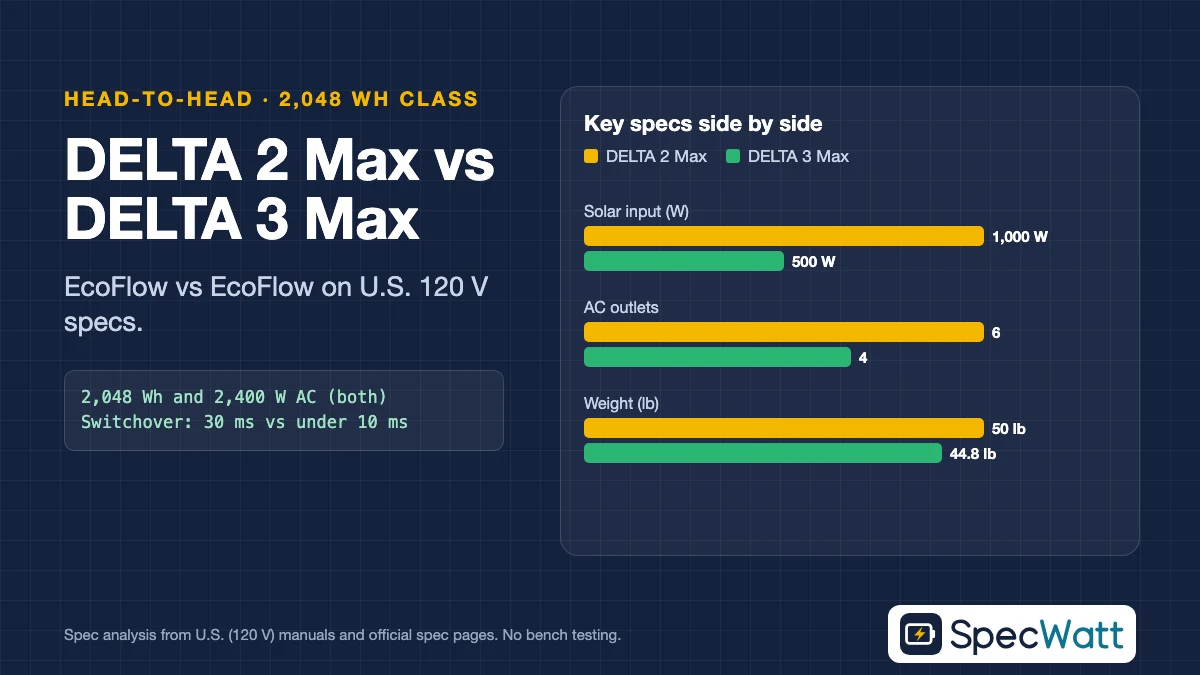
- Best OverallEcoFlow DELTA 3 MaxSame 2,048 Wh and 2,400 W, with a switchover under 10 ms vs. 30 ms and about 5 lb less weight.Check Price for EcoFlow DELTA 3 Max (opens Amazon in a new tab)
Picks are based on the manufacturer specs and the math in this guide. Prices change often, so check the current price on Amazon.
In the DELTA 2 Max vs DELTA 3 Max comparison, the DELTA 3 Max is the better buy for most homes: it switches to battery in under 10 ms instead of 30 ms, weighs about 5 lb less and cost $150 less on EcoFlow’s U.S. store on November 19, 2026. The DELTA 2 Max wins only if you need more than 500 W of solar input or plan to add an extra battery later.
Both stations hold the same 2,048 Wh of LFP and deliver the same 2,400 W of continuous AC power at 120 V, so their runtimes are identical. What separates them is everything around the battery: switchover speed, solar input, outlets and expansion. We compared both using EcoFlow’s own U.S. documents.
Category Winners: DELTA 2 Max vs DELTA 3 Max at a Glance
Each row names the winner of one category in the DELTA 2 Max vs DELTA 3 Max matchup and the EcoFlow spec that decides it. Where the two tie on paper, the table says so rather than inventing a difference that the spec sheets don’t show.
| Category | Winner | Deciding spec |
|---|---|---|
| Best Overall | EcoFlow DELTA 3 Max | Under 10 ms switchover vs. 30 ms, and about 5 lb lighter |
| Best for Solar | EcoFlow DELTA 2 Max | 2 × 500 W inputs (1,000 W) vs. 500 W |
| Best for Expansion | EcoFlow DELTA 2 Max | Takes a Smart Extra Battery; the DELTA 3 Max page lists none |
| Runtime on any load | Tie | Same 2,048 Wh and 2,400 W AC rating |
| Who should skip the DELTA 3 Max | Solar-first and off-grid users | 500 W solar ceiling, no extra-battery port |
| Who should skip the DELTA 2 Max | Desktop PC or NAS owners | 30 ms EPS switchover |
The DELTA 3 Max takes the overall award because the things it improves matter during every outage, while the DELTA 2 Max’s advantages only matter if you charge from a large solar array or expect to outgrow 2 kWh. If neither applies to you, the newer model is the simpler pick.
Price adds to that case. EcoFlow’s U.S. store listed the DELTA 3 Max at $879 (down from $1,199) and the DELTA 2 Max at $1,029 on November 19, 2026, which works out to about $0.43 and $0.50 per rated watt-hour. Sale prices change quickly, so check both listings before you decide.
Specs Side by Side
This DELTA 2 Max vs DELTA 3 Max spec table lists the rated battery size, the continuous AC rating at 120 V with surge in parentheses, solar input, wall charging, switchover time and weight. X-Boost is EcoFlow’s reduced-voltage mode for resistive loads such as heaters and kettles.
Models at a glance
EcoFlow
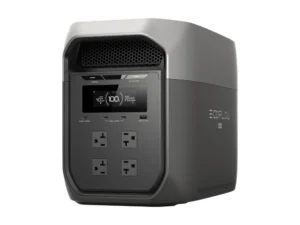
DELTA 3 Max
- Capacity2,048 Wh LFP
- Solar input500 W max
- Outage switchoverUPS, under 10 ms
Best for: Same 2,048 Wh and 2,400 W, with a switchover under 10 ms vs. 30 ms and about 5 lb less weight.
Check Price on Amazon for EcoFlow DELTA 3 Max (opens Amazon in a new tab)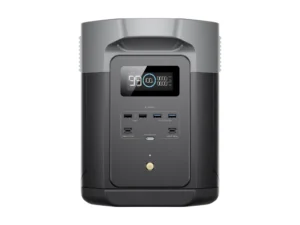
EcoFlow
DELTA 2 Max
- Capacity2,048 Wh LFP
- Solar input2 × 500 W, 11–60 V, 15 A (1,000 W)
- Outage switchoverEPS, 30 ms
Best for: Solar and expansion: 1,000 W of solar input vs. 500 W and a 4 kWh extra-battery option.
Check Price on Amazon for EcoFlow DELTA 2 Max (opens Amazon in a new tab)Specs from each model's U.S. manual or official datasheet. Full comparison in the table below. As an Amazon Associate we earn from qualifying purchases.
| Model | Capacity | Solar input | Outage switchover | AC output (120 V) | X-Boost | AC charging input | AC outlets | Weight | Price |
|---|---|---|---|---|---|---|---|---|---|
| EcoFlow DELTA 3 Max | 2,048 Wh LFP | 500 W max | UPS, under 10 ms | 2,400 W (4,800 W surge) | 3,400 W | 1,800 W (0–80% in 68 min) | 4 × 20 A | About 44.8 lb | Check Price for EcoFlow DELTA 3 Max (opens Amazon in a new tab) |
| EcoFlow DELTA 2 Max | 2,048 Wh LFP | 2 × 500 W, 11–60 V, 15 A (1,000 W) | EPS, 30 ms | 2,400 W (4,800 W surge) | 3,400 W | 1,800 W | 6 | About 50 lb | Check Price for EcoFlow DELTA 2 Max (opens Amazon in a new tab) |
Sources: EcoFlow DELTA 3 Max (2048Wh) U.S. spec page, read November 19, 2026; EcoFlow DELTA 2 Max user manual V1.0 (model EFD350, 120 V). The DELTA 3 Max weight is EcoFlow’s 20.3 kg figure converted to pounds. Its U.S. page lists solar input as 500 W but doesn’t list the voltage and current limits.
The batteries are the same size and chemistry, and EcoFlow rates both inverters at 2,400 W continuous with a 4,800 W surge. The DELTA 2 Max manual lists 3,000 cycles to 80% capacity; the DELTA 3 Max page doesn’t publish a cycle count and instead cites an estimated 10-year lifespan from EcoFlow’s internal testing.
The differences that matter are elsewhere. The DELTA 3 Max moves a plugged-in load to battery in under 10 ms, while the DELTA 2 Max’s EPS takes up to 30 ms. The DELTA 2 Max has two solar ports and six AC outlets; the DELTA 3 Max tops out at 500 W of solar input and has four 20 A outlets.
Runtime Compared at 120 V
Because both store 2,048 Wh, their runtimes are identical under our formula: 85% of rated capacity is usable, AC loads run through an 85%-efficient inverter, and the inverter draws an assumed 10 W of idle power. EcoFlow doesn’t publish an idle figure for either model.
| Load (example, on AC) | DELTA 2 Max | DELTA 3 Max |
|---|---|---|
| Wi-Fi router and modem, 20 W | 51.9 h | 51.9 h |
| CPAP with humidifier and heated tube, 34 W | 34.8 h | 34.8 h |
| Refrigerator, 600 kWh/yr label (about 68 W average) | 19.2 h | 19.2 h |
| TV and streaming box, 100 W | 13.6 h | 13.6 h |
| Microwave drawing 1,500 W from the outlet | About 59 min | About 59 min |
Formula: hours = rated Wh × 0.85 ÷ (load W ÷ 0.85 + 10 W). The CPAP figure is ResMed’s published average for an AirSense 10 with humidifier and heated tube (doc. 1018673/1). Try your own appliance labels in the runtime calculator.
Identical runtimes are why the DELTA 2 Max vs DELTA 3 Max decision comes down to recharging and switchover rather than battery size. On a wall outlet both accept 1,800 W, so the real gap opens on solar: with 1,000 W of panels the DELTA 2 Max can, on paper, refill in a little over two hours of full-rated sun before charging losses, while the DELTA 3 Max’s 500 W ceiling roughly doubles that time.
Real panels deliver less than their rating, so treat those figures as best cases. If you plan to rely on the sun during a multi-day outage, the DELTA 2 Max’s extra input is the single biggest functional difference between the two stations.
Scenario Breakdown: Which One for Your Situation
Pick by the job, not by the model year. The table matches common situations in the DELTA 2 Max vs DELTA 3 Max choice to the better station and the EcoFlow spec behind it.
| Scenario | Better pick | Why |
|---|---|---|
| Desktop PC, NAS or router through outages | DELTA 3 Max | Under 10 ms switchover vs. 30 ms |
| Refrigerator through an overnight outage | Either | Same 19.2 h on a 600 kWh/yr fridge |
| Multi-day outage with solar panels | DELTA 2 Max | 1,000 W of solar input vs. 500 W |
| You expect to need 4 kWh later | DELTA 2 Max | Smart Extra Battery support |
| Moving it between rooms or a vehicle | DELTA 3 Max | About 44.8 lb vs. 50 lb |
For CPAP use, check your device manual and talk to your doctor or equipment supplier before relying on battery power. A 30 ms switchover keeps most appliances running, but some desktop computers and network storage devices may reboot during gaps that long.
Running a refrigerator is well within both ratings. Honda’s wattage guide lists about 1,200 W of starting power for an Energy Star refrigerator, comfortably below the 2,400 W continuous rating either station offers, so the startup spike isn’t a deciding factor here.
EcoFlow DELTA 3 Max: Who It’s For
The DELTA 3 Max suits buyers who want a 2 kWh home-backup battery with a true UPS-class switchover and no plans for a large solar array. EcoFlow’s U.S. page lists 2,048 Wh of LFP, 2,400 W of AC output (4,800 W surge), 1,800 W wall charging to 80% in 68 minutes and a switchover under 10 ms.
It’s also the lighter of the two at about 44.8 lb. One catch is easy to miss: EcoFlow’s compatibility note says the DELTA 3 Max has only an XT60 port and no XT150, and its page lists no extra battery. Expansion from 2 to 10 kWh belongs to the DELTA 3 Max Plus, a different model.
Who should skip it: anyone planning more than 500 W of solar, and buyers who want to add capacity later without replacing the station.
EcoFlow DELTA 2 Max: Who It’s For
The DELTA 2 Max fits solar-first users and anyone who wants room to grow. Its U.S. manual lists two solar inputs at 11–60 V and 15 A (500 W each, 1,000 W combined), six AC outlets, two 100 W USB-C ports and 3,000 cycles to 80% capacity.
EcoFlow’s U.S. store also sold it with a DELTA 2 Max Smart Extra Battery as a 4 kWh bundle on November 19, 2026. That makes it the better base for a long-outage plan that pairs panels and extra storage. Run your panel string through our Voc & MPPT compatibility checker before you buy, because 60 V is a hard ceiling.
Who should skip it: owners of desktop PCs or network storage that must ride through a switchover, and buyers who only need 2 kWh at the lowest price.
Our Verdict
For most buyers, the DELTA 2 Max vs DELTA 3 Max choice goes to the DELTA 3 Max: the same battery and AC output, a switchover under 10 ms, about 5 lb less weight and a lower store price on November 19, 2026. Choose the DELTA 2 Max if solar input or expansion is central to your plan.
Check current prices in the model cards above. To compare these two with the BLUETTI AC200L and Jackery Explorer 2000 Plus, read our 2000Wh power station comparison, or see the DELTA 2 Max vs BLUETTI AC200L head-to-head.
Frequently Asked Questions
For most homes, the DELTA 3 Max. Both hold 2,048 Wh and deliver 2,400 W, but the DELTA 3 Max switches over in under 10 ms vs. 30 ms and weighs about 5 lb less. The DELTA 2 Max is better for solar (1,000 W vs. 500 W) and expansion.
Yes. EcoFlow lists 2,048 Wh of LFP for both. Under our formula, both run a 600 kWh/year refrigerator for about 19.2 hours and a 34 W CPAP for about 34.8 hours on AC power; check your CPAP manual and talk to your doctor or equipment supplier first.
EcoFlow’s U.S. page for the DELTA 3 Max (2048Wh) lists only an XT60 port and no extra battery. Expandable capacity of 2 to 10 kWh is a feature of the DELTA 3 Max Plus, a separate model.
The DELTA 2 Max. Its manual lists two 500 W solar inputs for 1,000 W combined, while the DELTA 3 Max’s U.S. page lists 500 W maximum. From a wall outlet, both accept up to 1,800 W.
Yes. Both are rated for 2,400 W continuous, well above the roughly 1,200 W Honda lists for an Energy Star refrigerator’s start. A fridge with a 600 kWh/year label runs about 19 hours on either one under our assumptions.