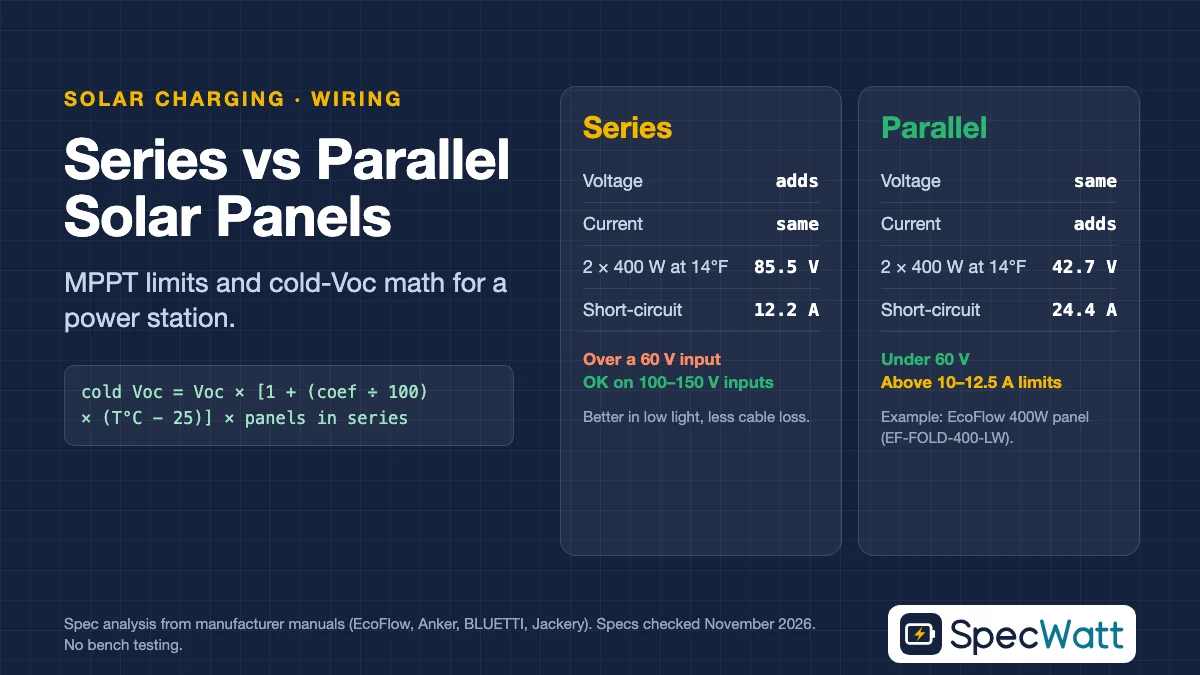
The series vs parallel solar panels question has a simple rule and an expensive exception. Series wiring adds the panels’ voltages, parallel wiring adds their currents, and either can work, but only if the result stays inside your power station’s solar input limits on the coldest morning of the year. This guide walks through the math with a real panel and real station limits from the manufacturers’ manuals, and the Solar Panel Voc & MPPT Compatibility Checker checks your own setup.
You’ll see why wiring solar panels in series and parallel changes more than the plug count: it changes how early your panels start charging, how much power you lose in the cable and whether a frosty morning can push the input past its limit. Each section uses numbers you can verify in the manuals named in the tables, and the same formulas power the compatibility checker.
Series vs. Parallel Solar Panels: The Short Answer
The series vs parallel solar panels difference starts with how the leads connect. In series, you connect the positive lead of one panel to the negative lead of the next, so voltage adds up while current stays the same. In parallel, you join all positives together and all negatives together, so current adds up while voltage stays the same. Here’s what that means for two EcoFlow 400 W lightweight panels (model EF-FOLD-400-LW), using the open-circuit voltage of 39.3 V, short-circuit current of 12.2 A and Voc temperature coefficient of −0.25% per °C listed in the panel’s manual.
| Two EcoFlow 400 W panels | Voc at 77°F (25°C) | Voc at 14°F (−10°C) | Short-circuit current | Fits a 60 V / single-panel input? |
|---|---|---|---|---|
| One panel (reference) | 39.3 V | 42.7 V | 12.2 A | Yes |
| Two in series | 78.6 V | 85.5 V | 12.2 A | No, over 60 V |
| Two in parallel | 39.3 V | 42.7 V | 24.4 A | Voltage yes; check the current limit |
Specs checked November 2026. Cold Voc uses the formula in the next sections; 14°F is an example record low, so use your own.
That table is the whole decision in miniature. Series breaks the voltage limit of a 60 V input; parallel stays under it but doubles the current the input has to accept. Neither one is wrong in general: the right answer depends on which of your station’s limits has room, which is what the rest of this guide checks step by step.
How Your Power Station’s MPPT Input Sets the Rules
The series vs parallel solar panels choice is really a question about your station’s input, because every power station’s solar input has a voltage window, a current limit and a wattage cap, and its built-in MPPT (maximum power point tracking) charge controller only works inside that window. These are the limits five manufacturers publish for popular models, taken from their manuals:
| Power station | Voltage window | Max current | Max solar watts | Source |
|---|---|---|---|---|
| EcoFlow DELTA 3 Plus | Up to 60 V (per XT60i port) | Not listed in source | 500 W per port | EcoFlow 400W Lightweight Solar Panel manual |
| EcoFlow DELTA Pro | Up to 150 V | Not listed in source | 1,600 W | EcoFlow 400W Lightweight Solar Panel manual |
| Jackery Explorer 1000 v2 | 16–60 V per DC8020 port | 10.5 A per port | 400 W combined | Explorer 1000 v2 manual (JE-1000D), EU edition |
| Anker SOLIX C1000 | 11–60 V | 10 A (11–32 V), 12.5 A (32–60 V) | 600 W | SOLIX C1000 manual (A1761), JP edition |
| BLUETTI AC180 | 12–60 V | 10 A | 500 W | AC180 user manual |
Specs checked November 2026.
Voltage is the limit that damages hardware. BLUETTI’s AC180 manual warns that open-circuit voltage above 60 V will damage the device, and Goal Zero’s Yeti 3000 Lithium manual gives the same kind of warning for its 22 V inputs. Current and wattage above the limit are handled differently from model to model, so check what your manual says before you plan on exceeding either one.
Cold-Voc Math: Why Winter Mornings Decide the Wiring
Temperature is the part of the series vs parallel solar panels decision most people skip. A solar panel’s voltage goes up as its cells get colder. The highest voltage your array will ever produce happens at sunrise on the coldest day, when the panels are cold and the sun hits them before they warm up. That’s the number to compare with the station’s maximum input, not the Voc printed on the label, which is measured at 77°F (25°C).
The effect is small per degree but adds up across a string. A coefficient of −0.25% per °C sounds tiny, yet a 35°C (63°F) drop below 77°F (25°C) raises each panel’s voltage by almost 9%, and wiring panels in series multiplies that rise by the number of panels. That’s why a string that looks safe on the label can still exceed a 60 V input in January, and why the series vs parallel solar panels choice should always come after the cold-Voc check.
The Formula
Cold Voc = label Voc × [1 + (temperature coefficient ÷ 100) × (coldest temperature in °C − 25)] × panels in series. The temperature coefficient of Voc is a negative percentage per °C on the panel’s spec sheet; if your panel doesn’t list one, −0.30% per °C is a common planning assumption. The checker takes °C and shows the °F equivalent as you type.
Use the record low for where the panels will actually sit, not the average winter temperature. A balcony in Denver and a campsite in Florida produce very different worst cases from the same panel, and the margin you need comes from the coldest morning, not a typical one.
Worked Example: Two EcoFlow 400 W Panels
This is where series vs parallel solar panels stops being theory. On a 14°F (−10°C) morning, each EcoFlow 400 W panel reaches 39.3 × [1 + 0.0025 × 35] ≈ 42.7 V. Two in series reach about 85.5 V, which is over the DELTA 3 Plus’s 60 V input but inside the DELTA Max’s 100 V and the DELTA Pro’s 150 V inputs. EcoFlow’s own manual matches the math: it recommends two of these panels in series for the DELTA Max and DELTA Pro, and one panel per XT60i port for the DELTA 3 Plus.
For colder places the margin shrinks quickly. At −4°F (−20°C) the same panel reaches about 43.7 V, so a pair in series sits near 87.4 V. That’s still inside a 100 V input, but it shows why a string that clears the limit by only a few volts on paper is a risk in a northern winter.
Which U.S. Models Accept Two EcoFlow 400 W Panels?
Applying the series vs parallel solar panels checks to eight U.S. models shows how few can take this particular panel at all. A “No” for current follows our conservative rule that the panel’s Isc should not exceed the listed maximum current; the manuals don’t say a higher Isc damages the input. Each check uses values derived from the panel’s manual (42.7 V cold Voc at 14°F, calculated from its 39.3 V Voc, and 12.2 A short-circuit current) against each station’s U.S. manual or official datasheet.
Models at a glance
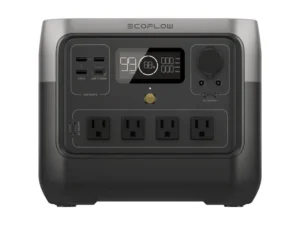
EcoFlow
RIVER 2 Pro
- Input window11–50 V
- Max current13 A
- One panelYes, capped at 220 W
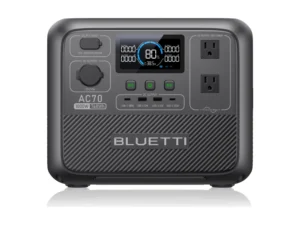
BLUETTI
AC70
- Input window12–58 V
- Max current10 A
- One panelNo, 12.2 A is over 10 A
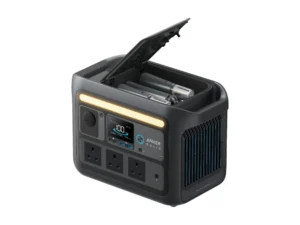
Anker SOLIX
C800X
- Input window11–60 V
- Max current10 A
- One panelNo, over 10 A
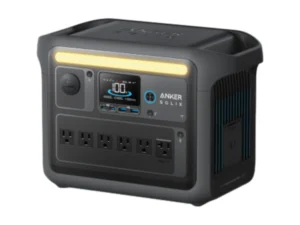
Anker SOLIX
C1000
- Input window11–60 V
- Max current12.5 A above 32 V
- One panelYes
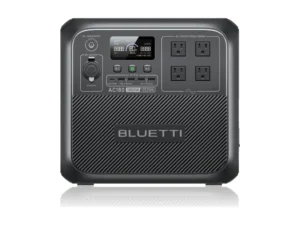
BLUETTI
AC180
- Input window12–60 V
- Max current10 A
- One panelNo, over 10 A
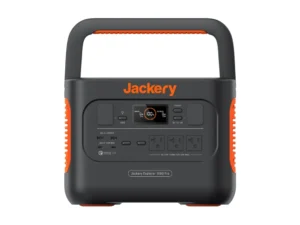
Jackery
Explorer 1000 Pro
- Input window12–60 V
- Max current11 A above 17.5 V
- One panelNo, over 11 A
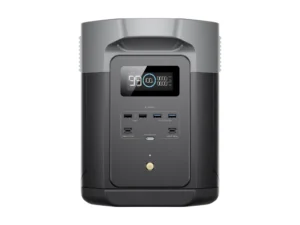
EcoFlow
DELTA 2 Max
- Input window11–60 V per port
- Max current15 A per port
- One panelYes, one per port
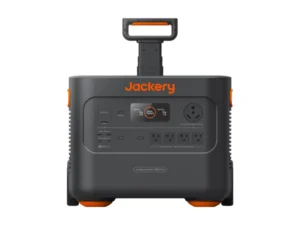
Jackery
Explorer 2000 Plus
- Input window11–60 V per port
- Max current12 A above 17.5 V
- One panelNo, 12.2 A is just over 12 A
Specs from each model's U.S. manual or official datasheet. Full comparison in the table below. As an Amazon Associate we earn from qualifying purchases.
| Model | Input window | Max current | One panel | Two in series (85.5 V) | Two in parallel (24.4 A) | Price |
|---|---|---|---|---|---|---|
| EcoFlow RIVER 2 Pro | 11–50 V | 13 A | Yes, capped at 220 W | No, over 50 V | No, over 13 A | Check Price for EcoFlow RIVER 2 Pro (opens Amazon in a new tab) |
| BLUETTI AC70 | 12–58 V | 10 A | No, 12.2 A is over 10 A | No | No | Check Price for BLUETTI AC70 (opens Amazon in a new tab) |
| Anker SOLIX C800X | 11–60 V | 10 A | No, over 10 A | No | No | Check Price for Anker SOLIX C800X (opens Amazon in a new tab) |
| Anker SOLIX C1000 | 11–60 V | 12.5 A above 32 V | Yes | No, over 60 V | No, over 12.5 A | Check Price for Anker SOLIX C1000 (opens Amazon in a new tab) |
| BLUETTI AC180 | 12–60 V | 10 A | No, over 10 A | No | No | Check Price for BLUETTI AC180 (opens Amazon in a new tab) |
| Jackery Explorer 1000 Pro | 12–60 V | 11 A above 17.5 V | No, over 11 A | No | No | Check Price for Jackery Explorer 1000 Pro (opens Amazon in a new tab) |
| EcoFlow DELTA 2 Max | 11–60 V per port | 15 A per port | Yes, one per port | No, over 60 V | No, over 15 A | Check Price for EcoFlow DELTA 2 Max (opens Amazon in a new tab) |
| Jackery Explorer 2000 Plus | 11–60 V per port | 12 A above 17.5 V | No, 12.2 A is just over 12 A | No | No | Check Price for Jackery Explorer 2000 Plus (opens Amazon in a new tab) |
Specs from each model’s U.S. (120 V) user manual or official Anker datasheet, checked November 2026. Prices change often, so confirm the current price and exact model on the retailer’s page.
The lesson isn’t that these stations are bad; it’s that a large panel’s current can rule out an input before voltage does. Smaller panels with a short-circuit current under 10 A fit most of these inputs, and two of them in series often stay under 60 V, which is the series vs parallel solar panels combination the rest of this guide explains.
When Series Is the Better Choice
When the voltage limit allows it, series is usually the stronger choice. EcoFlow’s 400 W panel manual recommends series wiring for better performance in low-light conditions. As a general rule, a higher string voltage gives the charge controller more headroom above its minimum operating voltage when uniform low light, such as an overcast sky, pulls every panel’s output down.
Series also wastes less power in cables. Loss in a cable equals current squared times resistance, so halving the current cuts the loss to a quarter. With 25 feet of 12 AWG extension cable (about 0.08 ohms for the full loop, using the NBS Handbook 100 copper wire tables’ 1.588 ohms per 1,000 feet), two of these panels at their rated operating current of 11.7 A lose roughly 11 W in series. In parallel the combined 23.4 A loses about 44 W in the same cable, four times as much.
When Parallel Is the Better Choice
Parallel makes sense when series would push the cold Voc over the station’s limit and the current limit has room to spare. Two 100 W-class panels with Voc near 22 V each, for example, reach about 49 V in series at 14°F if they have a −0.30% per °C coefficient, which is fine on a 60 V input, but three would not be. In that case, two strings in parallel can add panels without adding voltage. Parallel also has a general engineering advantage under partial shade: in a series string, a shaded panel drags down the current of the whole string, while in parallel the unshaded panels keep producing close to their normal output.
The catch is current. Two EcoFlow 400 W panels in parallel produce 24.4 A of short-circuit current, well above the 12.5 A the Anker SOLIX C1000 manual lists for 32–60 V panels and the 10 A BLUETTI lists for the AC180. EcoFlow’s manual says the same about its own stations: parallel connection of these panels isn’t recommended, because the current may exceed the input limits.
Series-Parallel Arrays for Bigger Stations
Bigger arrays raise the series vs parallel solar panels question twice, because stations can take solar panels in series and parallel at the same time: four or more panels wired as series strings joined in parallel. High-voltage inputs, like the DELTA Pro’s 150 V, leave the most room for this. For each string, check the cold Voc; for the whole array, check the combined current and wattage.
Jackery’s Explorer 1000 Pro manual, for example, routes three or four SolarSaga panels through a separately sold solar series connector rather than plugging them straight into the DC8020 ports. The Explorer 1000 Pro’s input tops out at 60 V, and its manual warns that connecting too many panels to a single input triggers over-voltage protection. When a brand sells a dedicated combiner like this, it’s the safest route, because the brand designed it for that input.
Brand Rules to Respect Before You Wire Anything
Before you settle the series vs parallel solar panels question, read your manual’s wiring rules, because manufacturers often add rules beyond the electrical limits. Jackery’s Explorer 1000 v2 manual says each DC8020 port takes one 100 W or 200 W panel directly, and that two 100 W panels on a single port need a solar panel connector, sold separately. BLUETTI’s AC180 manual allows series or parallel wiring within its 12–60 V, 10 A and 500 W limits, but asks you not to mix different types of panels.
Goal Zero’s Yeti 3000 Lithium manual is the strictest of the group: panels chained in series beyond 22 V can’t be used. In practice, that means 12 V-class panels wired in parallel are the only arrays that fit its inputs. If you’re not sure which wiring your station supports, our solar panel connector guide lists each brand’s ports and adapters.
Why You Shouldn’t Mix Different Panels
Basic circuit rules explain why mixed panels waste power in both wiring styles. In series, every panel carries the same current, so the weakest panel limits the whole string. In parallel, every panel is held at the same voltage, so a panel with a lower operating voltage pulls the others away from their best point. That’s why either wiring works best with identical panels from the same model line.
Solar charging is DC only and never connects to your home’s wiring; the U.S. 120 V / 60 Hz standard applies only to the power station’s AC outlets and wall charger. UK/AU note: the series and parallel math is identical worldwide, and only the station’s AC side changes to 230 V / 50 Hz. For the full picture of matching panels to stations, see our guide to solar panels for portable power stations.
Frequently Asked Questions
Series wins in most series vs parallel solar panels setups if the cold Voc stays under the station’s maximum input voltage, since it handles low light better and loses less power in cables. Choose parallel when series would exceed the voltage limit and the current limit has room.
Multiply the label Voc by [1 + (coefficient ÷ 100) × (coldest °C − 25)]. With −0.25%/°C at 14°F (−10°C), a 39.3 V panel reaches about 42.7 V. Multiply by the panels in series for the string.
Only if their combined cold Voc stays below 60 V. Two 400 W panels near 39 V each reach about 85 V on a cold morning, so they need a high-voltage input like EcoFlow’s 100 V or 150 V models.
Over-voltage can damage the input. BLUETTI’s AC180 manual says Voc above 60 V will damage the device. Others, like the Jackery Explorer 1000 Pro, describe over-voltage protection that cuts in, but don’t count on it: keep the cold Voc under the limit.
It’s not recommended. In series the weakest panel limits the string’s current; in parallel mismatched voltages pull panels off their best point. BLUETTI’s AC180 manual says not to mix different types of panels.