Quick Verdict: Top Picks
- Fastest Solar RechargeEcoFlow DELTA 3 PlusThe most solar input per Wh of the five (about 0.98 W/Wh): two 400W panels refill 20–100% in about 1.4 h of full sun.Check Price for EcoFlow DELTA 3 Plus (opens Amazon in a new tab)
- Best for 2 kWh SolarEcoFlow DELTA 2 MaxTwo 500 W inputs at 15 A each: two 400W panels refill 2,048 Wh from 20% in about 2.7 h of full sun (four 220W panels, about 2.5 h).Check Price for EcoFlow DELTA 2 Max (opens Amazon in a new tab)
Picks are based on the manufacturer specs and the math in this guide. Prices change often, so check the current price on Amazon.
The best solar panel setup for a power station is the one that fills its solar input without breaking its voltage or current limits. For the EcoFlow DELTA 2 Max, that’s two EcoFlow 400W panels, one per input, for about 2.7 hours of full sun from 20% to 100%. For a 1,000 Wh station like the Jackery Explorer 1000 v2, two 200 W panels do the same job in about 2.9 hours.
This guide gives a specific setup for five popular stations: EcoFlow DELTA 3 Plus, EcoFlow DELTA 2 Max, BLUETTI AC180, Anker SOLIX C1000 Gen 2 and Jackery Explorer 1000 v2. For the theory behind volts, amps and watts, read our solar panels for portable power station guide; for panel-by-panel specs, see our portable solar panel comparison.
How We Build Each Solar Panel Setup
Every solar panel setup below follows three rules from the station’s own U.S. documents. The cold-morning Voc of the string must stay under the input’s voltage limit, the panel’s Isc should stay at or under the listed input current, and total rated watts should be close to, but not far above, the input’s watt limit.
Recharge times use the same assumptions as our solar charging calculator: 75% of rated panel watts reaches the battery after heat, angle, dirt and conversion losses, and each time refills from 20% to 100%. Hours are hours of full sun; at 5 peak sun hours a day, 2.5 hours of full sun takes about half a day.
Five Stations and Their Solar Inputs
The table lists the solar input limits that shape each solar panel setup. Note the two-band input on the Anker SOLIX C1000 Gen 2 and the per-port watt cap on the Jackery Explorer 1000 v2: both change which panels make sense.
Models at a glance
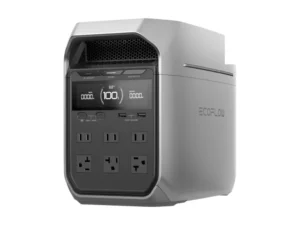
EcoFlow
DELTA 3 Plus
- Capacity1,024 Wh
- Solar input2 × 500 W (1,000 W)
- Voltage window11–60 V
Best for: The most solar input per Wh of the five (about 0.98 W/Wh): two 400W panels refill 20–100% in about 1.4 h of full sun.
Check Price on Amazon for EcoFlow DELTA 3 Plus (opens Amazon in a new tab)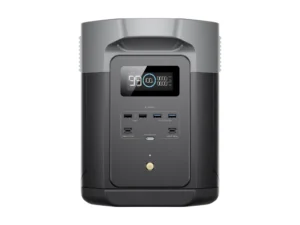
EcoFlow
DELTA 2 Max
- Capacity2,048 Wh
- Solar input2 × 500 W (1,000 W)
- Voltage window11–60 V
Best for: Two 500 W inputs at 15 A each: two 400W panels refill 2,048 Wh from 20% in about 2.7 h of full sun (four 220W panels, about 2.5 h).
Check Price on Amazon for EcoFlow DELTA 2 Max (opens Amazon in a new tab)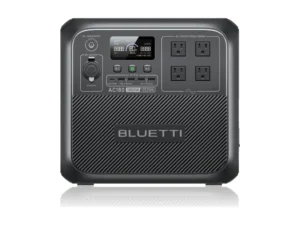
BLUETTI
AC180
- Capacity1,152 Wh
- Solar input500 W
- Voltage window12–60 V
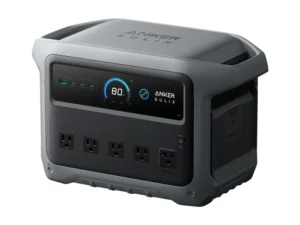
Anker SOLIX
C1000 Gen 2
- Capacity1,024 Wh
- Solar input600 W
- Voltage window11–28 V or 29–60 V
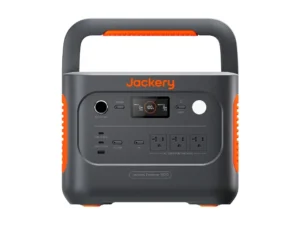
Jackery
Explorer 1000 v2
- Capacity1,070 Wh
- Solar input2 × 200 W (400 W)
- Voltage window16–60 V (12–16 V at 8 A)
Specs from each model's U.S. manual or official datasheet. Full comparison in the table below. As an Amazon Associate we earn from qualifying purchases.
| Model | Capacity | Solar input | Voltage window | Max current | Price |
|---|---|---|---|---|---|
| EcoFlow DELTA 3 Plus | 1,024 Wh | 2 × 500 W (1,000 W) | 11–60 V | Not published | Check Price for EcoFlow DELTA 3 Plus (opens Amazon in a new tab) |
| EcoFlow DELTA 2 Max | 2,048 Wh | 2 × 500 W (1,000 W) | 11–60 V | 15 A per input | Check Price for EcoFlow DELTA 2 Max (opens Amazon in a new tab) |
| BLUETTI AC180 | 1,152 Wh | 500 W | 12–60 V | 10 A | Check Price for BLUETTI AC180 (opens Amazon in a new tab) |
| Anker SOLIX C1000 Gen 2 | 1,024 Wh | 600 W | 11–28 V or 29–60 V | 8.2 A or 14.5 A | Check Price for Anker SOLIX C1000 Gen 2 (opens Amazon in a new tab) |
| Jackery Explorer 1000 v2 | 1,070 Wh | 2 × 200 W (400 W) | 16–60 V (12–16 V at 8 A) | 10.5 A per port | Check Price for Jackery Explorer 1000 v2 (opens Amazon in a new tab) |
Sources: EcoFlow DELTA 3 Plus U.S. spec page and EcoFlow 400W panel manual; EcoFlow DELTA 2 Max U.S. manual (EFD350); BLUETTI AC180 manual; Anker SOLIX C1000 Gen 2 U.S. Specs tab; Jackery Explorer 1000 v2 U.S. Tech Specs and user manual (pairing guidance). Checked November 19, 2026.
Award criteria. Fastest Solar Recharge goes to the highest solar input per watt-hour of capacity (the DELTA 3 Plus, at about 0.98 W per Wh), and Best for 2 kWh Solar to the model that refills the most energy from solar in one 5-peak-sun-hour day: 1,638 Wh in about 2.7 hours of full sun on the DELTA 2 Max, with a published 15 A per-input limit. Both were in stock at EcoFlow’s U.S. store on November 19, 2026.
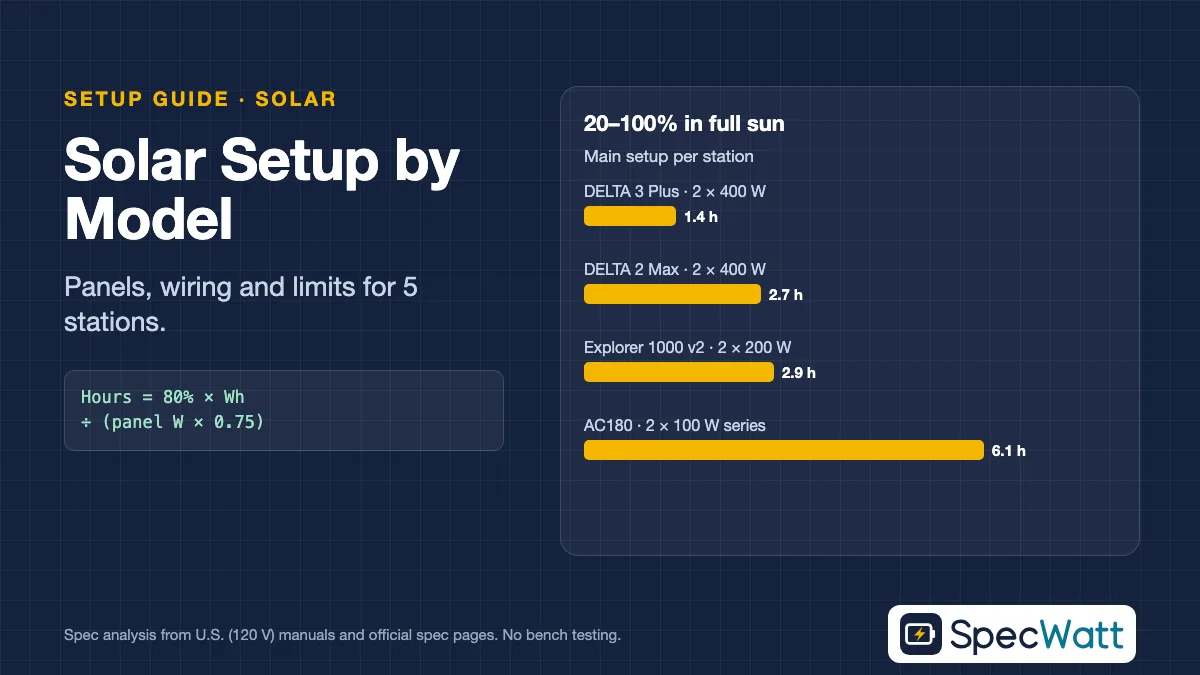
The summary below gives our main setup for each station. Panel watts are rated (STC) watts; the recharge column uses 75% of the smaller of the panel rating and the station’s cap.
| Station | Main setup | Rated watts used | 20–100% in full sun |
|---|---|---|---|
| DELTA 3 Plus | 2 × EcoFlow 400W, one per input | 800 W | About 1.4 h |
| DELTA 2 Max | 2 × EcoFlow 400W, one per input | 800 W | About 2.7 h |
| AC180 | 2 × EcoFlow 100W Rigid in series | 200 W | About 6.1 h |
| C1000 Gen 2 | 1 × EcoFlow 400W | 400 W | About 2.7 h |
| Explorer 1000 v2 | 2 × Jackery SolarSaga 200W, one per port | 400 W | About 2.9 h |
Hours = 80% of rated Wh ÷ (rated panel watts × 0.75). EcoFlow’s panels showed as unavailable on EcoFlow’s U.S. store on November 19, 2026; in-stock alternatives are in each section. The SolarSaga 200W didn’t appear as a standalone item in Jackery’s U.S. store search that day; check Amazon listings for the U.S. version.
EcoFlow DELTA 3 Plus Solar Panel Setup
EcoFlow’s 400W panel manual recommends one panel per input on the DELTA 3 Plus, so the best EcoFlow DELTA 3 Plus solar panel setup is two EcoFlow 400W panels, one on each XT60i input. That’s 800 W rated against a 1,000 W combined limit, and about 600 W after losses, for roughly 1.4 hours of full sun from 20% to 100% (819 Wh ÷ 600 W).
For a lighter kit, one EcoFlow 220W Bifacial delivers about 165 W after losses and needs about 5 hours. EcoFlow’s U.S. page lists 11–60 V per input but no current limit, so with third-party MC4 panels, ask EcoFlow before going above the 12.2 A of its own 400W panel. One 400W panel reaches about 42.7 V on a 14°F morning, well under 60 V.
Who should skip this setup: anyone who needs to carry the kit far; two 400W panels weigh about 45 lb together.
EcoFlow DELTA 2 Max Solar Panel Setup
The DELTA 2 Max is the station where a bigger solar panel setup pays off most. Its U.S. manual lists two solar inputs at 11–60 V, 15 A and 500 W each. Two EcoFlow 400W panels, one per input, keep Isc at 12.2 A under the 15 A limit and give 800 W rated, about 600 W after losses: roughly 2.7 hours of full sun to refill 1,638 Wh.
If you want to push closer to the 1,000 W ceiling, wire two EcoFlow 220W panels in series on each input: about 43 V Voc per string (roughly 47 V on a freezing morning) and 12.4 A, for 880 W rated and about 2.5 hours. As a general rule, rear-side light adds current on a bifacial panel, so the 12.4 A front-side Isc leaves about 2.6 A of margin under the 15 A limit, less over snow or white surfaces. An in-stock ecoflow delta 2 max solar panel alternative is the BLUETTI SP200L, two in series per input (about 54 V cold, 10.8 A), through MC4-to-XT60 cables, for 800 W rated.
| DELTA 2 Max setup | Per input | Total rated | 20–100% in full sun |
|---|---|---|---|
| 2 × EcoFlow 400W | 1 panel | 800 W | About 2.7 h |
| 4 × EcoFlow 220W | 2 in series | 880 W | About 2.5 h |
| 4 × BLUETTI SP200L | 2 in series | 800 W | About 2.7 h |
As a general rule, cold Voc estimates add about 10% to label Voc where the maker doesn’t publish a coefficient (about −0.3% per °C over a 35°C drop). Never wire 400W panels in series on a 60 V input: two reach about 85.5 V on a 14°F morning.
BLUETTI AC180 Solar Panel Setup
The AC180’s manual lists 12–60 V, 10 A and 500 W, and states that Voc above 60 V will damage the device. The 10 A limit is the one that shapes a BLUETTI AC180 solar panel setup: many 200 W-class panels list Isc above 10 A, including BLUETTI’s own SP200L at 10.8 A.
The setup that stays inside every published limit is two EcoFlow 100W Rigid panels in series: 40.6 V Voc (about 45 V cold) and 6.3 A, 200 W rated, roughly 6.1 hours of full sun to refill 922 Wh. BLUETTI’s SP200L would double that on paper, but its 10.8 A Isc is above the AC180’s listed 10 A, so under our hard-limit rule we don’t pair them; look for MC4 panels at or under 10 A of Isc and use MC4-to-DC7909 cables. Check the 100W Rigid’s listing for its connector before ordering a cable.
Who should skip the AC180 for solar: anyone who wants a fast solar refill; at the 10 A limit, panel choice is narrow, and the 500 W cap is half the DELTA 3 Plus’s.
Anker SOLIX C1000 Gen 2 Solar Panel Setup
The C1000 Gen 2 has a two-band solar input that changes the math for any solar panel setup. Anker lists 11–28 V at 8.2 A and 29–60 V at 14.5 A, with 600 W maximum through its XT60i input. A single 200 W-class panel runs in the low band, where the limit is 8.2 A: one EcoFlow 220W at its 18.4 V operating voltage has 12.4 A of Isc, above that limit, and even within it would top out near 151 W (8.2 A × 18.4 V). Use two in series or one higher-voltage panel instead.
The best Anker C1000 Gen 2 solar panel setup is one EcoFlow 400W panel, which runs at about 34.5 V in the high band with 12.2 A of Isc, under the 14.5 A limit: 400 W rated and about 2.7 hours of full sun from 20% to 100%. Two BLUETTI SP200L panels in series do the same at 400 W rated, about 49 V Voc, with MC4-to-XT60 cables.
Who should skip it: anyone set on reaching the full 600 W; among the panels in our comparison, no single string reaches 600 W while staying under 60 V cold.
Jackery Explorer 1000 v2 Solar Panel Setup
Jackery’s Explorer 1000 v2 caps each DC8020 port at 200 W and 10.5 A (16–60 V), 400 W across both. Jackery’s manual pairs one 200 W panel per port, so the standard solar panel setup, and the usual solar panel for Jackery 1000 v2 owners, is two SolarSaga 200W panels, one per port: 400 W rated, about 300 W after losses, roughly 2.9 hours of full sun to refill 856 Wh.
A bigger panel doesn’t help here: a 400 W panel on one port still charges at no more than 200 W, and EcoFlow’s 400W lists 12.2 A of Isc, above the 10.5 A per-port limit, so we don’t pair it. For a light kit, one SolarSaga 100 Air (7.1 lb) delivers about 75 W after losses and needs about 11.4 hours. The SolarSaga 200W lists 12.5 A of Isc, above the 10.5 A per-port figure on paper; it’s in the setup only because Jackery’s manual pairs one 200 W panel with each port. With third-party panels, keep Isc at or under 10.5 A.
| Explorer 1000 v2 setup | Rated watts used | 20–100% in full sun | Kit weight |
|---|---|---|---|
| 2 × SolarSaga 200W, one per port | 400 W | About 2.9 h | About 28.7 lb |
| 1 × SolarSaga 200W | 200 W | About 5.7 h | 14.33 lb |
| 1 × SolarSaga 100 Air | 100 W | About 11.4 h | 7.1 lb |
Hours = 856 Wh ÷ (rated watts × 0.75). Panel weights from Jackery’s product listings.
Which Solar Panel Setup Fits Your Use
For outage backup, a solar panel setup that refills the station in one sunny day matters most. At 5 peak sun hours, every main setup above except the AC180’s refills from 20% in less than a day; the AC180’s 200 W kit takes about 1.2 days.
For camping, weight per watt and setup time matter more than speed. A Jackery Explorer 1000 v2 with one SolarSaga 200W puts back about 750 Wh on a 5-peak-sun-hour day (150 W × 5 h), enough for light loads over a weekend. A DELTA 2 Max with four 220W panels (about 62 lb of panels) is a base-camp or RV kit. Our camping and RV guide has the station side of that choice.
Our Verdict
The best solar panel setup is the one matched to each station’s limits: two 400W panels, one per input, for the DELTA 3 Plus and DELTA 2 Max; one 400W panel or two 200 W panels in series for the C1000 Gen 2; two SolarSaga 200W panels for the Explorer 1000 v2; and a low-current string for the AC180. The DELTA 3 Plus refills fastest; the DELTA 2 Max carries the most.
Check your exact panels in our Voc and MPPT compatibility checker before you buy, and read our series vs. parallel guide before wiring more than one panel per input.
Frequently Asked Questions
Two EcoFlow 400W panels, one per input, give 800 W within the 15 A and 60 V limits, about 2.7 hours of full sun from 20% to 100%. MC4 panels such as the BLUETTI SP200L work through MC4-to-XT60 cables, two in series per input.
For a 2,048 Wh station, 800 W of panels refills 20% to 100% in about 2.7 hours of full sun at 75% delivery. Two 400 W panels or four 200 W panels, wired within the input’s limits, get you there.
One EcoFlow 400W panel fits the DELTA 2’s 500 W solar cap; EcoFlow’s 400W panel manual lists the DELTA 2 input at up to 60 V. Its U.S. page doesn’t publish a current limit, and it’s no longer sold new on EcoFlow’s U.S. store.
We don’t pair one. Each port caps at 200 W, and EcoFlow’s 400W lists 12.2 A of Isc, above the 10.5 A per-port limit. Two SolarSaga 200W panels, one per port, use both caps, and Jackery’s manual pairs them with the station.
Below 28 V, the C1000 Gen 2 lists an 8.2 A limit. As a general rule, a 200 W-class panel runs near 18 V with more than 8.2 A of Isc, so even 8.2 A × 18 V caps it near 150 W. Two in series move into the 29–60 V band, where the limit is 14.5 A.