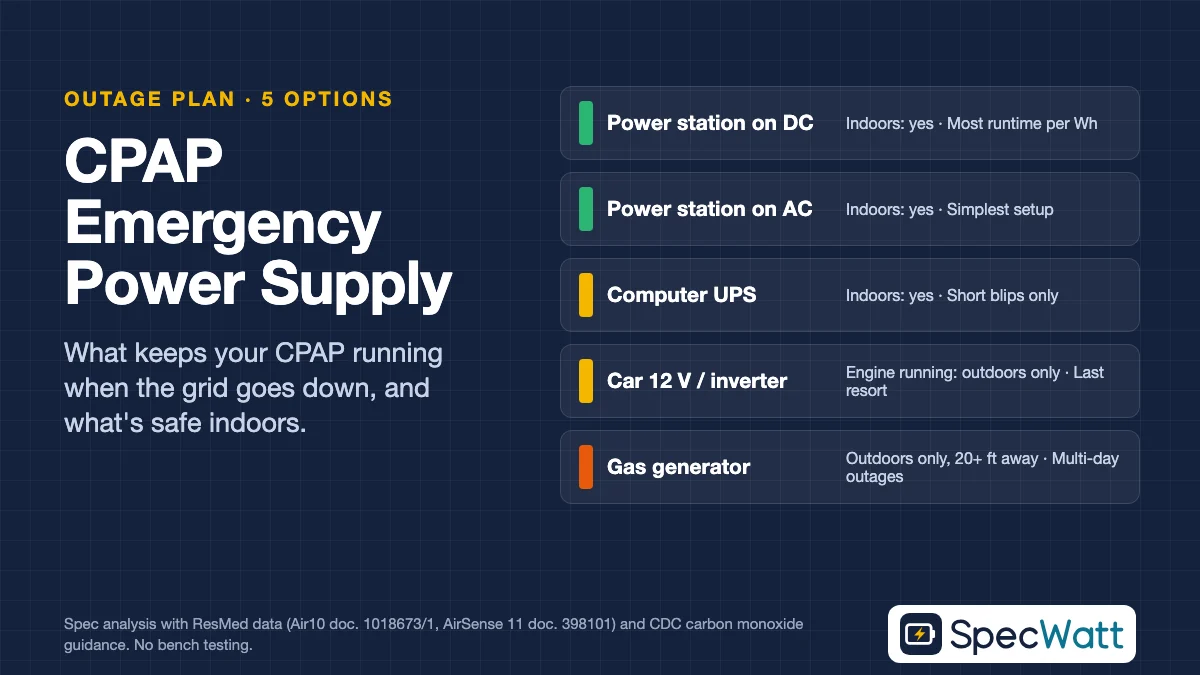
A CPAP emergency power supply is whatever keeps your machine running when the grid goes down in the middle of the night. There are five realistic options, from a portable power station to a gas generator in the driveway, and they differ sharply in safety, runtime and convenience. This guide compares all five with the same energy math we use in our CPAP battery backup sizing guide, so you can pick the one that fits your outage risk instead of the one with the biggest number on the box.
What Happens to Your CPAP During a Power Outage
Without a CPAP emergency power supply, the blower simply stops during a CPAP power outage. The machine doesn’t store energy of its own, so airflow ends the moment power is lost. Many people notice the change and wake up, but you shouldn’t count on it. Full-face masks typically include an anti-asphyxia valve that opens to room air when airflow stops; check your mask’s user guide to confirm yours has one and where it is.
That’s the safety baseline, not a plan. If a CPAP power outage means you sleep without therapy, ask your doctor how risky that is for you and how long you can safely go without it. The answer decides whether your CPAP emergency power supply needs to cover one night, a long weekend or a week of storm damage.
The 5 CPAP Emergency Power Supply Options at a Glance
For most homes, the best CPAP emergency power supply is a portable power station feeding the CPAP over DC; the other four options trade away safety, runtime or both. Every option gets energy to your CPAP in one of two ways: through a 120 V AC outlet (the CPAP’s normal power supply plugged into an inverter) or through a DC connection (a manufacturer’s DC cable or converter fed from a 12 V source). The table compares them on the points that matter most in a real outage.
| Option | How it powers the CPAP | What limits runtime | Safe to use indoors? | Best fit |
|---|---|---|---|---|
| Portable power station | AC outlet or 12 V DC port | Battery watt-hours | Yes | Most homes and apartments |
| Power station + CPAP DC converter | DC, no inverter | Battery watt-hours (used more efficiently) | Yes | Longest runtime per dollar of battery |
| Computer UPS | AC outlet | Small internal battery | Yes | Bridging short blips, not full nights |
| Car 12 V socket or inverter | DC cable or AC inverter | Car battery and fuel | Engine off: yes. Engine running: outdoors only, never in any garage | Short emergencies when nothing else is available |
| Gas or propane generator | AC outlet via extension cord | Fuel supply | No, outdoors only | Multi-day outages with a safe outdoor location |
Option 1: Portable Power Station on AC
This is the simplest CPAP backup power supply. You plug the CPAP’s normal power cord into the power station’s AC outlet and nothing else changes. The trade-off is efficiency: the inverter converts the battery’s DC into 120 V AC, and the CPAP’s own brick converts it back to DC. We assume 85% inverter efficiency plus about 10 W of idle draw, which is why a small load like a CPAP uses noticeably more battery on AC than its own wattage suggests.
Option 2: Power Station Plus a CPAP DC Converter
Feeding the CPAP from the power station’s 12 V port through the manufacturer’s DC cable or converter skips the inverter. ResMed, for example, lists an Air11 DC/DC converter as an accessory in newer AirSense 11 user guides (the 2022 U.S. English edition and the UK/EU edition, doc. 398272). For energy use, ResMed’s Air10 power-consumption sheet (doc. 1018673/1) lists about 7 Wh per hour for an AirSense 10 with the humidifier off, and our sizing math puts the DC path at well under half the battery use of the AC path for that same night.
Power Stations With Published Switchover Times
If you want the power station to take over automatically when the grid drops, the switchover time matters as much as capacity. These U.S. models publish it in their 120 V manuals or datasheets; two of them don’t, which doesn’t mean they lack the feature, only that we couldn’t verify it.
Models at a glance
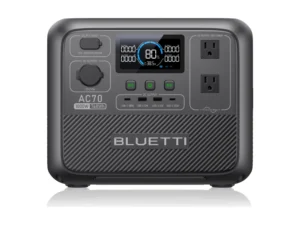
BLUETTI
AC70
- Capacity768 Wh
- UPS/EPS switchover (per manual)20 ms or less
- 12 V car port for a CPAP DC cable12 V, 10 A
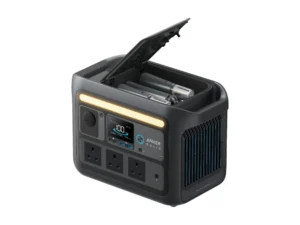
Anker SOLIX
C800X
- Capacity768 Wh
- UPS/EPS switchover (per manual)Under 20 ms
- 12 V car port for a CPAP DC cable10.8–14 V, 10 A
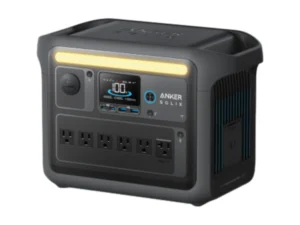
Anker SOLIX
C1000
- Capacity1,056 Wh
- UPS/EPS switchover (per manual)Under 20 ms
- 12 V car port for a CPAP DC cable10.8–14 V, 10 A
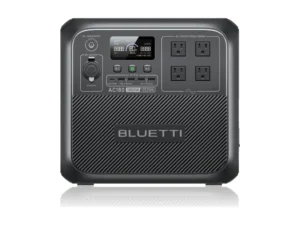
BLUETTI
AC180
- Capacity1,152 Wh
- UPS/EPS switchover (per manual)20 ms or less
- 12 V car port for a CPAP DC cable12 V, 10 A
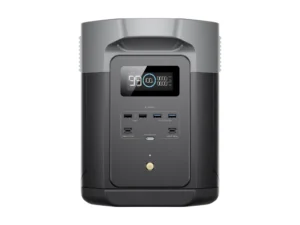
EcoFlow
DELTA 2 Max
- Capacity2,048 Wh
- UPS/EPS switchover (per manual)EPS 30 ms or less
- 12 V car port for a CPAP DC cable12.6 V, 10 A
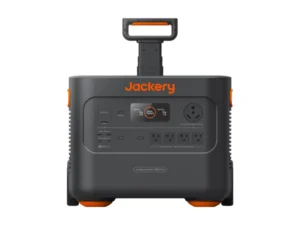
Jackery
Explorer 2000 Plus
- Capacity2,042.8 Wh
- UPS/EPS switchover (per manual)EPS 20 ms
- 12 V car port for a CPAP DC cable12 V, 10 A
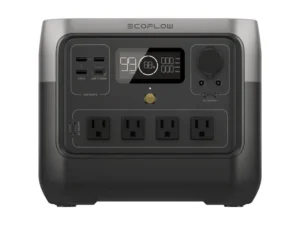
EcoFlow
RIVER 2 Pro
- Capacity768 Wh
- UPS/EPS switchover (per manual)Not listed
- 12 V car port for a CPAP DC cable12.6 V, 10 A
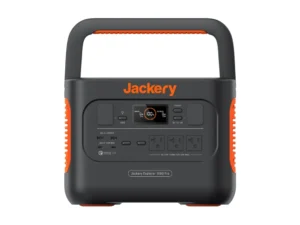
Jackery
Explorer 1000 Pro
- Capacity1,002 Wh
- UPS/EPS switchover (per manual)Not listed
- 12 V car port for a CPAP DC cable12 V, 10 A
Specs from each model's U.S. manual or official datasheet. Full comparison in the table below. As an Amazon Associate we earn from qualifying purchases.
| Model | Capacity | UPS/EPS switchover (per manual) | 12 V car port for a CPAP DC cable | Price |
|---|---|---|---|---|
| BLUETTI AC70 | 768 Wh | 20 ms or less | 12 V, 10 A | Check Price for BLUETTI AC70 (opens Amazon in a new tab) |
| Anker SOLIX C800X | 768 Wh | Under 20 ms | 10.8–14 V, 10 A | Check Price for Anker SOLIX C800X (opens Amazon in a new tab) |
| Anker SOLIX C1000 | 1,056 Wh | Under 20 ms | 10.8–14 V, 10 A | Check Price for Anker SOLIX C1000 (opens Amazon in a new tab) |
| BLUETTI AC180 | 1,152 Wh | 20 ms or less | 12 V, 10 A | Check Price for BLUETTI AC180 (opens Amazon in a new tab) |
| EcoFlow DELTA 2 Max | 2,048 Wh | EPS 30 ms or less | 12.6 V, 10 A | Check Price for EcoFlow DELTA 2 Max (opens Amazon in a new tab) |
| Jackery Explorer 2000 Plus | 2,042.8 Wh | EPS 20 ms | 12 V, 10 A | Check Price for Jackery Explorer 2000 Plus (opens Amazon in a new tab) |
| EcoFlow RIVER 2 Pro | 768 Wh | Not listed | 12.6 V, 10 A | Check Price for EcoFlow RIVER 2 Pro (opens Amazon in a new tab) |
| Jackery Explorer 1000 Pro | 1,002 Wh | Not listed | 12 V, 10 A | Check Price for Jackery Explorer 1000 Pro (opens Amazon in a new tab) |
Specs from each model’s U.S. (120 V) user manual or official Anker datasheet, checked November 2026. Prices change often, so confirm the current price and exact model on the retailer’s page.
EcoFlow’s DELTA 2 Max manual and Jackery’s Explorer 2000 Plus manual both describe these as basic UPS or EPS functions that don’t support 0 ms switching, and they warn against using them for equipment that needs a true uninterruptible supply. For a CPAP, check your device manual for how it handles a brief interruption, and keep the DC cable ready as a backup connection.
Several of these manuals also say the unit isn’t intended for life-critical medical equipment: EcoFlow’s RIVER 2 Pro and DELTA 2 Max manuals advise against powering medical emergency equipment such as hospital-grade CPAP ventilators, and BLUETTI’s AC180 manual excludes medical applications that depend on a reliable power supply. Check your model’s manual and follow your doctor’s guidance.
Option 3: A Computer UPS
An uninterruptible power supply (UPS) made for computers switches to battery in milliseconds, which is its real strength. Its weakness is capacity: these units are built to give a PC a few minutes to shut down, so their batteries are small. Check the runtime chart in the UPS manual at your CPAP’s wattage, and confirm whether the UPS outputs a pure sine wave on battery, because many budget models don’t.
Option 4: Your Car
A car can run a CPAP through a 12 V DC cable or a small inverter, but it’s a last resort. Running the engine to keep the battery charged produces carbon monoxide, so the car must be outside, never in an attached or closed garage, and you can’t safely sleep in it with the engine running. Without the engine, a draining starter battery may not start the car the next morning.
Option 5: A Generator
A gas or propane generator can run a CPAP, a refrigerator and lights for days, as long as you have fuel. It must run outdoors, at least 20 feet from doors, windows and vents (the CDC’s carbon monoxide guidance), and the CPAP connects through a heavy-duty outdoor extension cord. If you choose this route, a battery-powered carbon monoxide alarm inside the home is essential, and many people pair the generator with a power station that runs the CPAP quietly overnight.
How to Size Your CPAP Emergency Power Supply
Runtime comes down to one formula: rated watt-hours × usable share ÷ (CPAP watts ÷ efficiency + idle watts). Using the Air10 sheet’s figures for a 120 V AC setup, an 8-hour night costs roughly 146 Wh on AC with the humidifier off and about 400 Wh on AC with the humidifier and heated tube on. Our CPAP battery backup guide walks through every row of that math, including DC and the rated capacity to buy with a safety margin.
Assumptions: U.S. outlets at 120 V / 60 Hz; AC path at 85% inverter efficiency plus 10 W idle draw; DC path at 90% efficiency; 85% of rated capacity usable (the same baseline as our runtime calculator); 8-hour night. Data: ResMed Air10 power-consumption sheet (doc. 1018673/1) and AirSense 11 user guide (Americas edition, doc. 398101). Specs checked November 2026.
For your own machine, enter your station’s capacity in the Power Station Runtime Calculator and keep the 85% setting. For the load, enter the CPAP’s battery-side draw from the formula above rather than its label wattage: on AC that’s the CPAP watts ÷ 0.85 + 10 (about 18 W for a 7 W CPAP, 50 W for 34 W), and on DC it’s the CPAP watts ÷ 0.9. If you’re planning for winter storms, enter 80% of the rated capacity, because cold batteries deliver less energy and older ones store less to begin with. If the runtime falls short of the hours you need, try a larger capacity until your CPAP emergency power supply covers the target.
Build a CPAP Power Outage Plan Before You Need It
The best CPAP emergency power supply is the one that’s charged, connected and familiar before the storm. Many outage problems come from small things: a power station left at 20%, a DC cable that’s still in its box, or a humidifier setting nobody thought to change at 2 a.m. A short checklist removes most of that risk:
- Keep the power station charged above 80%, recharge it after every use, and follow the storage-charge interval in its manual.
- Store the CPAP’s DC cable or converter next to the machine, and try it once on a normal night.
- Decide in advance, with your doctor, whether you can lower or turn off humidification during an outage.
- Do a full dry-run night on battery so the runtime math is proven at home, not during an emergency.
- Ask your electric utility whether it runs a medical-needs or life-support registry, and keep a backup plan for longer outages.
Once those boxes are ticked, a CPAP power outage becomes an inconvenience instead of a crisis. You’ll know how many nights your battery covers, which cable to grab and when to switch to your next option.
Safety Rules for Any CPAP Backup Power Supply
Whatever CPAP emergency power supply you choose, never connect a generator or power station to your home’s wiring through a wall outlet. That kind of backfeeding can energize the utility lines and injure line workers; a transfer switch or interlock installed by a licensed electrician is the only safe way to feed household circuits. Keep any battery on a hard, flat surface with clear ventilation, and never run engines or fuel-burning equipment indoors.
A CPAP emergency power supply also doesn’t replace medical backup for life-support equipment. If you rely on oxygen or other critical devices, your doctor and equipment supplier should be part of the plan. UK/AU note: outlets there supply 230 V / 50 Hz, so buy the local version of any power station or UPS; the energy math in this guide stays the same.
Frequently Asked Questions
For most homes, a portable power station connected through the CPAP’s DC cable or converter. It’s safe indoors, quiet, and gives the most runtime per watt-hour. AC works too, with more energy lost to the inverter.
Only for short interruptions. Computer UPS batteries are small, so check the runtime chart in the manual at your CPAP’s wattage and make sure the UPS outputs a pure sine wave on battery.
The blower stops and airflow ends. Full-face masks typically have an anti-asphyxia valve that opens to room air. Many people wake from the change, but ask your doctor what’s safe for you.
Only with the engine off, using a DC cable, and only if the car battery can spare the energy. Never sleep in a car with the engine running, and never run it in any garage, because of carbon monoxide.
Yes, if it runs outdoors at least 20 feet from windows and doors, per the CDC, and you have a working carbon monoxide alarm inside. Never run a generator in a garage, basement or near open windows.